
Ask ten people where the best neighborhood in Miami is and you'll get ten different answers, and most of them are wrong for the person asking. A 28 year old who wants to walk to a bar on a Tuesday night and a couple raising two kids in elementary school are not shopping for the same Miami. They're not even shopping for the same county, even when the zip codes sit five miles apart. The buyers who get this wrong end up either bored out of a walkable lifestyle they paid a premium for, or stuck in a condo where the elevator smells like a frat house every weekend. This article splits Miami into the two ends of that spectrum, family-first and nightlife-first, names the specific areas that deliver each one honestly, and shows what the real estate actually costs you in trade-offs either way.
There's No Single Best Neighborhood in Miami, Just the Right Fit for Your Life
Most searches for the best neighborhood in Miami treat the question like there's a single correct ranking, the way you'd rank colleges or hospitals. Miami doesn't work that way. The county runs from quiet, sidewalk-and-yard suburbs where the loudest sound after 9pm is a sprinkler system, to high-rise corridors where the bar downstairs closes at 5am and the building's elevator bank doubles as a social scene on Friday nights. Neither version is the better Miami. They're built for different people.
If you're trying to find the best neighborhoods in Miami for families, the mistake almost everyone makes is starting with a name they heard from a coworker instead of starting with what their actual week looks like. Same problem in reverse for someone chasing nightlife: they tour a condo because the renderings looked good, not because they checked whether the building allows short-term rentals next door or whether the parking garage turns into valet chaos every Friday at 11pm.
The split that actually predicts whether you'll be happy a year in isn't price. It's whether the building type, the noise tolerance, and the zoning around a property match the life you're trying to live. A $700,000 single-family home in a quiet HOA-free pocket and a $700,000 one-bedroom condo three blocks from a bar strip are not two versions of the same purchase. They're two different products that happen to cost the same.
Best Neighborhoods in Miami for Families: Westchester and Miami Lakes
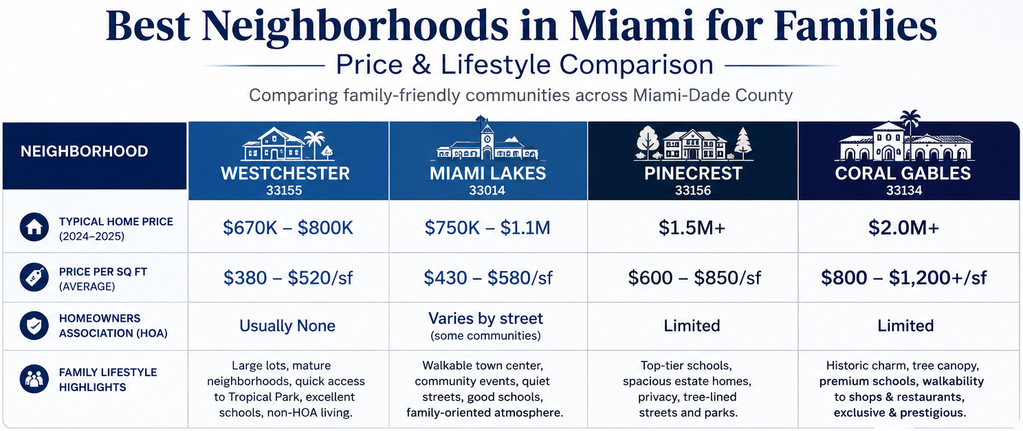
Most lists of the best family neighborhoods in Miami repeat the same three or four zip codes because nobody bothers updating the research once Pinecrest and Coral Gables show up. Those areas earn the attention, but they're not the only ones doing the job well, and they're priced like it. Westchester and Miami Lakes do the same work at a different price point, and neither gets mentioned enough.
Westchester, centered on zip code 33155, is almost entirely non-HOA single-family homes built between the 1950s and the 1980s on lots big enough for a pool and a swing set. A move-in-ready 3-bedroom here runs $670,000 to $800,000, against $380 to $520 per square foot. Bird Road cuts through the area with groceries, restaurants, and services within walking distance for most blocks, and Tropical Park sits right along the southern edge at SW 40th Street, which means a weekend soccer practice or a walk with the dog doesn't require getting in the car. No HOA means no board telling a family they can't put up a swing set or park a second car in the driveway, which matters more to families than people expect until they've lived under one.
Miami Lakes runs differently. It's an actual incorporated town with its own government, built around a walkable Main Street Shopping Center and a layout that deliberately keeps through traffic off residential streets. The family core sits in the NW 160s, where single-family homes with pools and updated kitchens run $750,000 to $1.1 million, some with no HOA and some with fees in the $200 to $400 monthly range depending on the specific street. The trade-off for the master-planned feel is worth checking block by block, since HOA status changes street to street here more than in most Miami-Dade towns.
When clients ask me for the best family neighborhoods in Miami, I always start with the same question: what does the actual week look like, not the weekend fantasy. A family that wants quiet streets and a yard but still needs a 20-minute commute to Doral or Brickell fits Westchester or Miami Lakes far better than it fits Pinecrest, no matter what the listicles say.
Best Neighborhoods in Miami for Nightlife: Brickell, South Beach, and Wynwood
Searches for the best neighborhoods in Miami for nightlife usually surface the same three names, and all three earn the spot for different reasons. Brickell, South Beach, and Wynwood deliver a night out within walking distance, but the buildings, the price points, and what you're actually buying into are not interchangeable.
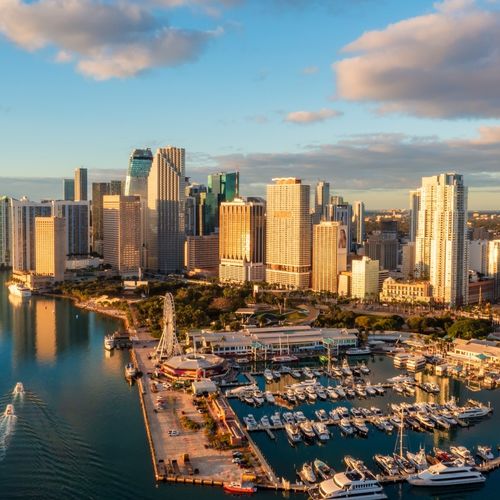
Brickell built its nightlife reputation around Mary Brickell Village, a stretch of bars and restaurants that stays loud well past midnight on weekends, all inside a ten-minute walk of most towers in the financial district. A one-bedroom in a newer Brickell building runs $550,000 to $750,000, with HOA fees of $800 to $1,400 a month covering the gym, the pool deck, and a doorman who knows which units host parties. Condo association approval here takes 30 to 60 days for financed buyers, and some buildings interview the buyer's board before closing, which is worth knowing before you fall for a unit on a tight timeline.
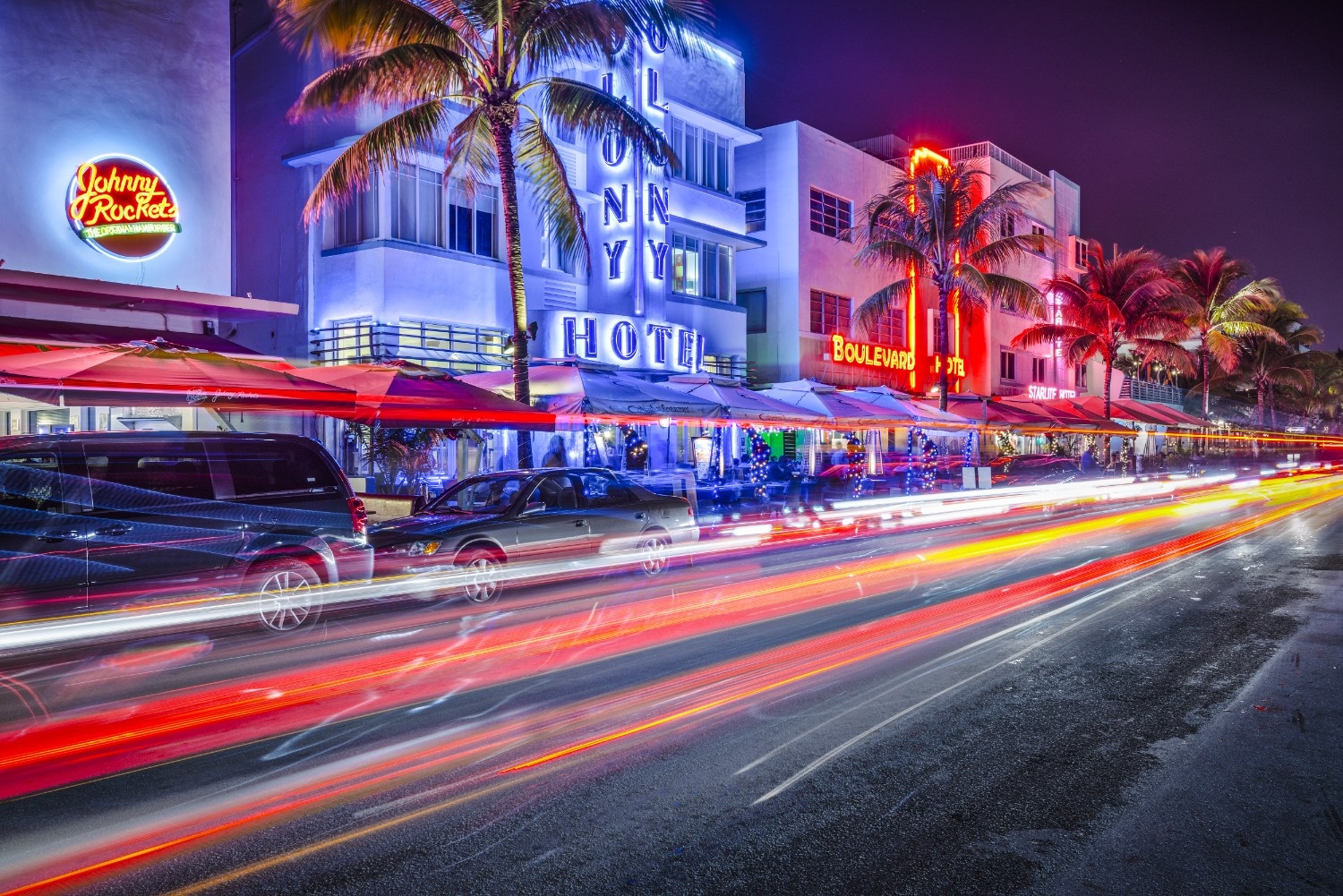
South Beach is the version most people picture when they say Miami nightlife. Ocean Drive and the Art Deco strip carry the postcard image, while Lincoln Road a few blocks north has a calmer, still-late dining and shopping scene that draws a slightly older crowd. HOA fees on Miami Beach buildings run $1,000 to $3,500 a month, financing takes longer because lenders dig into building reserves and litigation history, and a meaningful share of buyers here pay cash, often from outside the country. If you're financing, knowing which buildings are lendable before you tour them saves weeks.
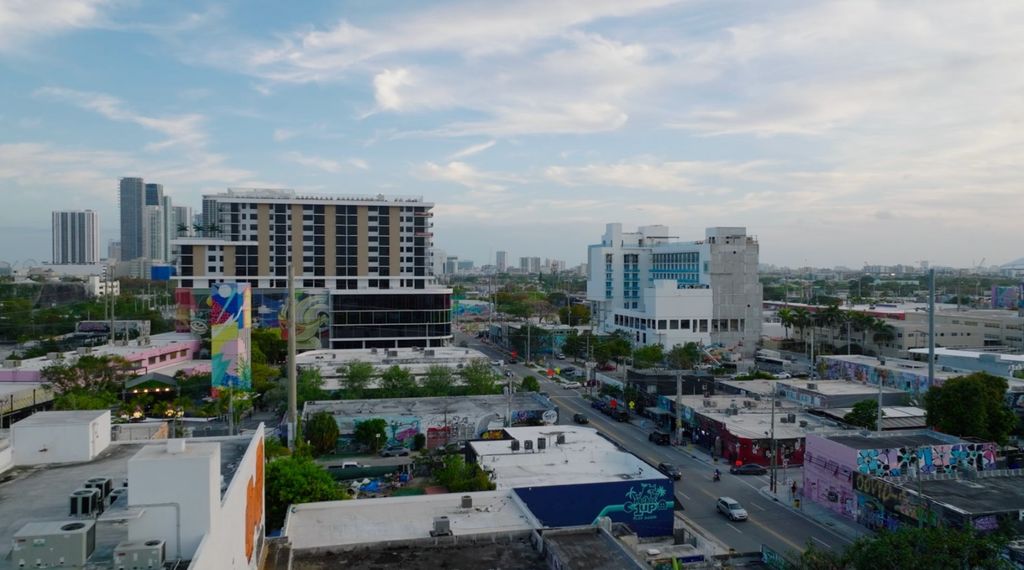
Wynwood plays a different role entirely. It has the strongest nightlife identity of the three, breweries, warehouse-turned-bar spaces, and a monthly art walk that fills the streets, but it's the weakest of the three as a place to actually live full time. Most of the inventory is newer loft-style or mixed-use development rather than traditional condo stock, supply is limited, and a lot of what makes Wynwood fun at 10pm makes it loud at 2am if your unit faces the wrong street. It's worth visiting before deciding it's worth living in.
Among the best neighborhoods in Miami for nightlife, the real differentiator isn't which one has the most bars. It's which building type matches how much noise, foot traffic, and turnover you're willing to live above.
Why Family Areas and Nightlife Areas in Miami Are Built Differently
The split between family neighborhoods and nightlife neighborhoods in Miami isn't really about taste. It's zoning, building type, and decades of permitting history stacked on top of each other.
Family-first areas like Westchester and the NW 160s in Miami Lakes are almost entirely single-family zoned, which caps density and keeps HOA involvement optional in a lot of pockets. No board means no rules about noise after 10pm because there's no shared wall to complain through. Nightlife-first areas like Brickell and South Beach are vertical by design, concrete towers stacked on top of ground-floor retail and restaurants, which means the HOA isn't optional. It's the only thing standing between forty units' worth of competing schedules and total chaos. This is why condo boards in these buildings interview buyers and run 30 to 60 day approval timelines. They're managing density that single-family streets never have to deal with, a distinction the Miami-Dade County government zoning and permitting records make clear once you compare two parcels side by side.
Insurance plays out differently across the two as well. Older single-family homes in Westchester get underwritten on roof age and plumbing, while waterfront towers in Brickell and South Beach get underwritten on flood zone and building reserves. Both can stall a closing timeline if a buyer doesn't check early, just for completely different reasons. The plain-English breakdown of how condo association rules and reserve requirements actually work is covered well by Nolo if you want the legal mechanics behind what your HOA can and can't enforce.
Seasonal demand hits these markets on different schedules too. Family inventory in Westchester and Miami Lakes moves at a steady pace year-round because school timelines, not snowbird season, drive the calendar. Nightlife-zoned buildings in Brickell and South Beach see real seasonal swings. October through April brings the heaviest international and northeastern buyer traffic, a pattern Florida Realtors tracks closely in its statewide market data, and a unit that sits through August with zero showings can suddenly draw three offers in November once the snowbirds and the holiday crowd are back in town.
Compare this to a market like Hialeah, which doesn't fit cleanly into either category. Hialeah is overwhelmingly single-family and duplex, low HOA involvement similar to Westchester, but without the walkable commercial corridor or the nightlife identity of Brickell. It's a reminder that most of Miami-Dade isn't actually choosing between family and nightlife at all. The two ends of this list are the extremes. Most of the county sits somewhere in the quiet middle, which is exactly why naming the two extremes clearly matters before you start comparing everything else against them.
The Mistake Buyers Make When They Pick the Wrong Side of This List
The most expensive mistake I see isn't choosing family over nightlife or the other way around. It's choosing based on the version of yourself you wish you were instead of the one paying the mortgage.
A client relocating from Chicago in 2025 came in set on Brickell, drawn by the walkability and the energy from a single visit during Art Basel. Six months after closing on a one-bedroom at $640,000, the same bar noise that felt exciting on a vacation weekend was the reason she couldn't sleep on a Tuesday before a 7am flight. She listed the unit, took a $35,000 loss against her purchase price after carrying costs and a soft spring market, and bought a townhome in Miami Lakes within the same year.
The reverse mistake costs just as much, usually in boredom rather than dollars. Buyers who pick a quiet family-zoned street while still single, no kids, working from a downtown office, often find themselves driving 25 minutes for dinner more nights than they expected, and the resale conversation two years later starts with needing to be closer to things to do.
The pattern in both directions is the same: people buy the lifestyle they want to want, not the one they're actually living right now. The fix isn't complicated. It's being honest about your current week, not your vacation self, before you write an offer.
Choosing the Right Neighborhood in Miami for Where You Are Now
Picking the right neighborhood in Miami isn't a personality test, it's a logistics problem dressed up as a lifestyle question. Where you work, whether kids are part of the next five years, how much noise you can sleep through, and what you're actually willing to drive to on a Tuesday night all point toward an answer before a single listing gets pulled up.
If Westchester or Miami Lakes sound like your week, you're already looking in the best neighborhoods in Miami for families band of the market, and the next step is checking which specific streets carry HOA fees and which don't before you fall for a listing photo. For the fuller area-by-area picture beyond these two, the Miami neighborhoods guide walks through the rest of the family corridor in more depth. If Brickell, South Beach, or Wynwood sound closer to it, the next step is asking about building approval timelines and noise exposure before the condo board asks you anything, and the Brickell real estate buyer's guide and the South Beach and oceanfront condo guide both go deeper on building-by-building specifics.
Matching the actual week you live to the specific streets and buildings that fit it is the first thing I walk through with every buyer before we look at a single listing. Real estate, mortgage, and title all running through one office means the lifestyle conversation and the financing conversation happen at the same table, not three separate ones.
FAQ
Q: What is the best neighborhood in Miami for nightlife within walking distance of home?
A: Brickell edges out South Beach for this specifically because of density rather than energy. Most Brickell towers sit within a five to ten minute walk of Mary Brickell Village, so you're not driving home from a night out, which matters more than people admit when weighing a 1am rideshare against a building elevator. South Beach has the bigger reputation, but the bar district along Ocean Drive is spread across a wider footprint, and parking after 10pm on a weekend adds real friction. If walking distance is the actual requirement and not just the aesthetic, Brickell wins on logistics even though South Beach wins the postcard contest.
Q: Which Miami neighborhoods are family-friendly but still close to restaurants and things to do?
A: Miami Lakes does this better than people expect, mostly because the town was designed around a walkable Main Street core from the start rather than retrofitting one later. Families in the NW 160s are a five to ten minute drive from sit-down restaurants, a movie theater, and weekend events at the town center, without giving up the single-family streets and pools that make the area work for kids. Westchester offers a version of the same trade-off along Bird Road, though the restaurant mix there leans more toward everyday dining than the date-night options Miami Lakes has built up around its Main Street Shopping Center.
Q: Is Wynwood a good place to actually live, or just a place to visit for nightlife?
A: For most buyers, visit. Wynwood's residential inventory is thin compared to its reputation, mostly newer loft-style units and mixed-use buildings rather than the traditional condo stock you'd find in Brickell or South Beach, and a lot of that inventory sits directly above or beside active nightlife, which means the noise that makes the neighborhood fun at 10pm doesn't stop at midnight. A small number of buyers genuinely want that and plan their unit selection around street-facing exposure specifically to avoid it. For most people chasing a primary residence rather than an investment unit, Brickell delivers a closer balance of nightlife access and livability.
Q: How do HOA rules differ between family neighborhoods and nightlife neighborhoods in Miami?
A: The difference is less about strictness and more about what's even being regulated. In Westchester's single-family stock, there's often no HOA at all, so there's nothing to enforce beyond county code, meaning a family can add a fence or park a second car without board approval. In Brickell or South Beach condo towers, the HOA is doing the job a city government would do in a single-family area: managing shared elevators, shared walls, parking allocation, and increasingly, short-term rental restrictions written specifically to control noise and turnover. Reading the actual HOA rules for short-term rental limits matters more in nightlife-zoned buildings than the monthly fee itself.
Q: Can you raise kids in a nightlife-heavy area like Brickell or South Beach?
A: Plenty of families do it, but it's a different version of family life than a yard in Westchester. Brickell has a growing number of families in larger 2 and 3-bedroom units, drawn by the walkability and nearby schools, and some buildings are quieter than others depending on floor and street exposure. The honest trade-off is space and noise control versus walkability and amenities. A family with a toddler who needs an early bedtime is going to feel a Friday night on a lower floor near Mary Brickell Village much more than a family on floor 30 facing the bay. Floor and exposure matter as much as the building's general reputation.
If you already know which side of this list fits your life, the next move is seeing what's actually available in that price range right now. The VIP Home Search lets you filter by area and price the moment new listings hit, whether that's a non-HOA street in Westchester or a Brickell tower with the right approval timeline for your closing date.
Check out this article next