
Most people searching for condos Miami Brickell end up on a national portal where inventory looks flat. A $395,000 studio and a $950,000 two-bedroom sit five rows apart, and the platform treats them as variations of the same product. They are not.
The search tool has no way to tell you that one building has a reserve fund sitting at 32% funded with a structural assessment arriving within 24 months, while the other has a clean financial history and a warrantable loan record going back eight years. National portals exist to generate leads. They are not designed to protect buyers from the variables that actually determine whether a purchase makes sense.
The variables that matter: building financial health, rental restriction structure, lender eligibility, investor concentration ratio, and true monthly carrying cost. None of those appear in any listing filter. This post covers what the platforms skip: the building-level intelligence that separates a sound purchase from a costly mistake, with Millecento as the case study.
Condos Miami Brickell Reward Building Selection More Than Market Timing
The first mistake most investors make in Brickell is framing the question wrong. "Is it a good time to buy?" is less useful than "Is this a good building to buy into?"
Market timing matters. But in Brickell's specific context, two buyers closing in the same month at the same purchase price can end up in fundamentally different financial positions three years later based purely on building selection. One building holds value, attracts quality tenants, and maintains conventional financing eligibility. Another accumulates deferred maintenance, carries a growing special assessment liability, and gradually loses resale liquidity as its investor concentration climbs past the threshold conventional lenders allow.
Brickell's resale market is sitting at approximately 17 months of inventory as of mid-2026, with an average days-on-market of around 113 days for resale units. For buyers and investors, that environment creates genuine selectivity. There is enough supply that you do not have to chase any individual unit. Using that leverage to select the right building, rather than simply negotiating the lowest price on whichever building captured your attention first, is where experienced buyers separate themselves from people who learn the hard way.
The Brickell buyer's guide covering HOA mechanics and current pricing covers the market-level price data and HOA due diligence framework in depth. This post builds on that foundation with the investor-specific analysis the overview does not address: yield math, the rental restriction landscape, and the building-level case study that illustrates how all of it plays out in practice.
Millecento Brickell Real Estate: A Case Study in Building-Level Value
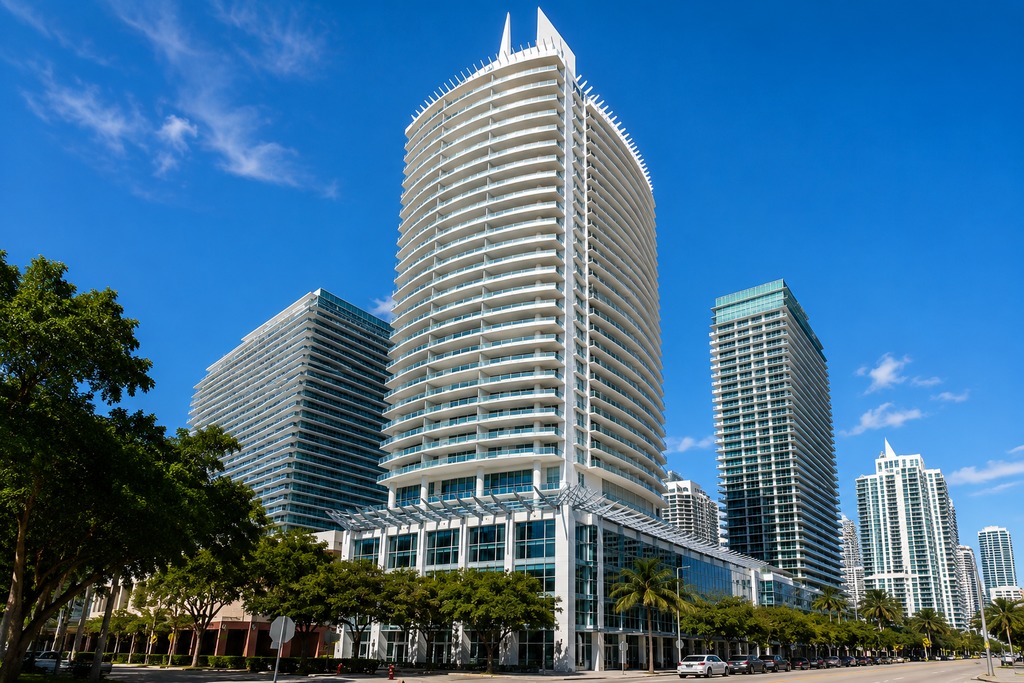
Most Brickell conversations skip directly to the trophy towers: Icon Brickell, the Brickell Flatiron, the branded new construction pipeline. Millecento Brickell real estate rarely leads those conversations, and that oversight is part of what makes it worth examining carefully for buyers and investors who want a building that has not been picked over.
Millecento stands at 1100 S Miami Ave, a 43-story tower delivered in 2015 with interiors developed in collaboration with Pininfarina, the Italian design studio responsible for some of the most recognized industrial design work in the world. The result is a building with a specific character: floor-to-ceiling windows, clean Italian-influenced lines, and finish quality that holds up well when placed alongside towers delivered several years later. Its location in South Brickell places it within easy walking distance of Brickell City Centre, where residents reach a department store, a full restaurant block, and a cinema without crossing a major intersection. For buyers who actually walk their neighborhood daily, that is a meaningful advantage, not a marketing claim.
What makes Millecento Brickell real estate worth examining for investors is the positioning in the price stack. It sits above the entry-tier buildings that require the most aggressive reserve fund scrutiny, but below the $1 million-plus luxury threshold where the buyer pool thins considerably. Studios typically list in the $360,000 to $430,000 range. One-bedrooms run approximately $480,000 to $620,000. Two-bedrooms fall between $750,000 and $880,000 depending on floor and view orientation. HOA fees run approximately $850 to $1,150 per month depending on unit size, reflecting the building's amenity profile rather than an inflated cost structure.
On the rental side, studios achieve roughly $2,600 to $2,800 per month in long-term leases. One-bedrooms lease at approximately $3,300 to $3,900. Two-bedrooms command $4,400 to $4,900 depending on floor and furnishing level. The tenant profile skews toward professionals working in the Miami Financial District along Brickell Avenue near Tamiami Trail, which is a six to eight minute walk from the building, and people who use Brickell City Centre as a daily utility rather than a weekend destination. Both tenant types produce stable, lower-turnover tenancies compared to buildings that attract more transient renters.
For the full tier-by-tier comparison across the Brickell submarket, from entry through luxury and the new construction pipeline, the building breakdown across Brickell covers each category in detail.
The Investment Math Behind Condos Miami Brickell in 2026
Numbers without context mislead, so let's run an actual calculation on a mid-tier unit.
A one-bedroom at Millecento priced at $550,000 with 20% down requires $110,000 at close and finances $440,000. At current mortgage rates for condominiums on a warrantable building (approximately 7.1 to 7.4% on a 30-year conventional product), monthly principal and interest runs approximately $2,980 to $3,060. Add HOA at $950, property taxes at roughly $550 per month (estimated at 1.2% annually on assessed value), and individual HO-6 unit insurance at approximately $175 per month. Total carrying cost on a financed purchase: approximately $4,655 to $4,735 per month before vacancy or management costs.
If the unit rents at $3,200 per month with a property manager at an 8% fee, net rent is approximately $2,944. A 5% vacancy allowance brings monthly net income to roughly $2,797. Against a $4,700 carrying cost, that is a negative monthly cash flow of approximately $1,900.
Brickell Miami condos in the mid-tier largely do not cash flow on a financed basis at current rates and purchase prices. Gross cap rates across Brickell Miami condos run approximately 4 to 6% on annual gross rent, which on a $550,000 purchase means roughly $22,000 to $33,000 in gross annual income. Once operating costs are removed, net cap rates compress to 2.5 to 3.5% for leveraged buyers. Florida Realtors market data for Miami-Dade reflects this compression consistently across comparable urban condo submarkets.
The cash buyer sees a different picture. A $550,000 all-cash purchase generating $3,200 per month gross produces an annual gross yield of approximately 7%. After property management, HOA, insurance, and taxes, net yield lands in the 4.2 to 4.8% range. For an investor with full liquidity, that is a competitive return in a market where tenant quality and asset liquidity are both strong.
This is the part most first-time Brickell investors find disorienting. The investment thesis here is not cash flow from day one. It is appreciation, tenant quality, and the refinance opportunity that a rate correction creates. A unit that produces a $1,900 monthly deficit at 7.3% financing becomes cash-flow neutral or mildly positive at 5.5%. Investors who model positive cash flow from the start and sell into a soft market absorb both the rate pain and the price discount. Investors who underwrite the actual numbers and hold through the rate cycle tend to come out ahead.
What Rental Restrictions Do to Condos Miami Brickell Returns
Before calculating any yield on a Brickell condo, read the association's rental restrictions. This is the step that gets skipped more often than any other part of the due diligence process.
The range in Brickell runs from genuinely investor-friendly buildings allowing 30-day minimum leases to heavily owner-occupied towers restricting rentals to one lease per unit per year on a 12-month minimum. Millecento's declaration establishes a 6-month minimum lease term, which eliminates short-term platforms and furnished rentals below that threshold. The gross rent difference between a compliant 6-month furnished lease and a 30-day platform rental on the same unit can run $1,500 to $2,500 per month. Knowing that before you build a rental income model is not optional.
Investor concentration thresholds require equal attention. Buildings where more than 35% of units are rented to non-owners typically fall outside Fannie Mae's condo project approval guidelines, which means conventional financing disappears at resale. A unit in a building carrying a 40% investor ratio is an asset most buyers can only acquire with cash or a portfolio loan at a higher rate. When your exit requires cash-only buyers or non-conventional financing, your buyer pool shrinks and your days on market extends. A cost like that does not show up in the cap rate calculation, but it shows up in the exit.
Florida's updated condo safety legislation requires buildings of three stories or more to complete a Structural Integrity Reserve Study on a defined schedule and fund reserves fully going forward. Buildings that previously waived reserve contributions are now catching up through special assessments. Reviewing the Florida Department of Business and Professional Regulation's condominium requirements confirms what documents an association is legally required to produce on request, and what an investor should demand before any offer is written.
The correct sequence for an investor: read the condo declaration for rental minimums and annual lease caps, request the current investor concentration ratio from the building's management company, then cross-reference against Fannie Mae project approval thresholds before writing any offer. This sequence takes a few business days. Skipping it takes 45 days to discover at underwriting.
Appreciation vs. Cash Flow: How Brickell Investors Choose Their Entry Point
Brickell investors break into two broad profiles. Approaching this market without identifying which one you are leads to mismatched expectations and decisions that solve the wrong problem.
The appreciation investor is buying into what the branded new construction pipeline is doing to Brickell's price ceiling. When 888 Brickell delivers in 2028 and 2029, Cipriani opens shortly after, and Mandarin Oriental establishes a new per-square-foot benchmark on Brickell Key, the resale value of a well-located 2015-era building moves in the same direction as the submarket's rising floor. A one-bedroom at Millecento that closes today at $550,000 sits in a different comparative context in 2028 when the street-level conversation in Brickell has shifted to $2,000-plus per square foot for new branded product. This investor accepts flat or modestly negative monthly cash flow in exchange for that price trajectory over a five to seven year hold period.
The cash flow investor targets buildings where the purchase price, HOA fee structure, and rental demand produce a breakeven or positive position from close. In Brickell, that generally points toward older entry-tier buildings where pricing sits below $450,000 and rents have not compressed at the same rate as purchase prices. The trade-off is reserve fund exposure and the special assessment risk that comes with buildings that spent years underfunding their reserve accounts, a risk that is no longer theoretical in the current legislative environment.
Along the South Miami Avenue corridor, where the Miami Financial District sits at the intersection of Brickell Avenue and Tamiami Trail, professional tenant demand is most concentrated. The walkability to Brickell City Centre, the Metromover connection, and the density of financial sector employers within a five-block radius create conditions where units lease quickly and tenants stay longer. Appreciation investors who want a solid tenant profile during the hold period and upside from the submarket's pricing trajectory tend to focus on buildings delivered between 2012 and 2018 in this corridor, where the building-level financial risk profile is cleaner than the entry tier without the price premium of the true luxury segment. Explore the Brickell area to map this corridor before comparing specific buildings.
What a National Portal Cannot Tell You About Condos Miami Brickell
A search for condos Miami Brickell on Zillow shows price, square footage, and listing photos. It does not show reserve fund funding percentage, pending or recently approved special assessments, the building's current Fannie Mae warrantability status, the investor concentration ratio, building-specific days-on-market patterns, pending litigation against the association, or the trajectory of the master insurance premium that drives HOA cost increases year over year.
These are the variables that determine whether a specific unit at a specific building is a sound acquisition or a liability priced at a premium.
A buyer who spends three weeks pursuing a unit in a building that fails warrantability at the lender review stage has lost negotiating position, time, and focus on an outcome that was predictable before the first tour. In a market with 17 months of inventory, there is no reason to operate that way.
Alberto Labrada holds a Florida real estate broker license, a mortgage broker license, and a title agent license. Bringing those three functions into one conversation means the building's financial health, its financing eligibility, and the title history can all be evaluated before significant time is committed to any specific unit. When the reserve study returns a 38% funding level, the offer strategy changes immediately rather than surfacing as a surprise at underwriting. Browse current Brickell listings with live MLS data to see what is actually available, and run your financing numbers through the mortgage calculator before engaging on any specific building.
Searching for condos Miami Brickell without building-level intelligence is the most consistent way buyers absorb costs they did not see coming. Millecento illustrates what a well-positioned mid-tier building looks like when the selection process starts with the right questions: a design-forward 2015 tower with strong professional tenant demand, accessible entry pricing relative to the submarket, and a location between Brickell City Centre and the Miami Financial District that serves both owner-occupants and long-term investors. Not every building in Brickell holds up to that level of scrutiny. Knowing which ones do, before the search begins, is the entire advantage. For buyers and investors evaluating condos Miami Brickell, that analysis is most valuable before the first offer, not after.
FAQ
Q: What is the typical cap rate on condos Miami Brickell for investors right now?
A: In Brickell as of Q2 2026, gross cap rates for long-term rental condos run approximately 4 to 6% depending on building tier and unit type. That range is wide because the variables that compress or expand yield differ significantly by building. Older entry-tier towers with lower purchase prices and more modest HOA fees often sit at the higher end of the gross range. Mid-tier buildings like Millecento, where purchase prices are higher and HOA fees are substantial, generally land in the 4 to 5% gross range. On a net basis, once property management, insurance, HOA, and taxes are factored in, financed buyers in the mid-tier are typically looking at 2.5 to 3.5% net yield. Cash buyers in the same building will see net yields closer to 4 to 5%. The investment thesis for most financed buyers is appreciation and tenant quality over the hold period, not monthly cash flow from the start.
Q: Does Millecento allow short-term rentals, and what are the lease term minimums?
A: Millecento's condo declaration establishes a minimum lease term of 6 months, which eliminates Airbnb, VRBO, and corporate furnished rental programs that operate on shorter cycles. That restriction matters before you build a rental income model, because the gross rent difference between a compliant 6-month furnished lease and a short-term platform rental on the same unit can run $1,500 to $2,500 per month. Millecento's rental demand is driven by long-term professional tenants, particularly those working in the Miami Financial District corridor on Brickell Avenue, which produces stable occupancy but not maximum gross yield. If short-term rental income is a core part of your investment thesis, you need a building with a different declaration, and you need to verify that building's investor concentration ratio before counting on conventional financing at resale.
Q: Which Brickell Miami condos have the strongest long-term rental demand?
A: Professional long-term rental demand concentrates in buildings closest to the Metromover network, Brickell City Centre, and the Miami Financial District along Brickell Avenue. Towers within a five-minute walk of a Metromover station consistently lease faster and at higher rents per square foot than comparable buildings that require a car for daily commuting. Within that corridor, buildings delivered between 2010 and 2020 with strong amenity packages and owner-occupancy rates above 65% attract the highest-quality tenant profiles: finance-sector professionals, corporate relocations, and international executives on multi-year assignments. Minimum lease terms also expand the tenant pool. Buildings with 6-month minimums draw furnished-lease corporate renters that 12-month-only buildings cannot capture. Millecento's position in this corridor, at 1100 S Miami Ave, with Brickell City Centre accessible on foot, places it squarely in the zone where that demand is strongest.
Q: How do foreign buyers purchase Brickell Miami condos, and are there financing restrictions?
A: Foreign nationals can purchase Brickell Miami condos in cash with no financing restrictions, and cash purchases from Latin American buyers, Venezuelan, Colombian, and Argentine capital in particular, have historically represented a meaningful share of Brickell's upper-tier transaction volume. For financed purchases, options exist but narrow considerably. Most US-based conventional lenders require a Social Security number or ITIN, and Fannie Mae programs are not available to non-US citizens without permanent residency. Foreign national loan programs are available through specialized lenders, typically requiring 30 to 40% down, 12 to 24 months of reserves, and rates above conventional products. A buyer's agent who also holds a mortgage license can map out the full financing picture before a foreign buyer commits time to a specific building, including whether the building itself qualifies under the loan program being considered.
Q: What documents should an investor request before making an offer on a Brickell condo?
A: Request the reserve study and current funding percentage, the past two years of audited financial statements, the last 12 months of board meeting minutes, any pending or recently approved special assessments, and the master insurance policy declarations page. Florida's updated condo safety legislation, enacted in the wake of the 2021 Surfside collapse, now requires buildings of three stories or more to complete a Structural Integrity Reserve Study on a regular cycle and prohibits associations from waiving full reserve funding going forward. Buildings that previously underfunded reserves are catching up through assessments, and that liability attaches to every unit in the building. A reserve study funded below 60% should either change your offer price significantly or end the search on that unit entirely. Getting these documents before the offer, not during the inspection period, is what keeps investors from inheriting a bill they did not budget for.
If you want to run the real numbers on a specific Brickell building before you commit to touring it, that conversation covers financing eligibility, building financial health, and rental income potential in one call. Browse current Brickell inventory with live MLS data and reach out directly when you find a unit worth examining. Alberto Labrada handles real estate, mortgage, and title in-house, so the building-level due diligence and your financing picture get resolved in the same conversation rather than three separate ones.
Check out this article next