
Most buyers approach Florida Key Biscayne real estate the same way they'd approach any Miami zip code: pull up listings, sort by price, schedule showings. Then they get to the island and something feels different, and they can't quite name it. The reason is structural. Key Biscayne isn't a neighborhood inside Miami. It's its own incorporated village, with its own government, and that fact alone shapes everything from school zoning to how fast a permit clears. Buyers who skip this part end up surprised later, sometimes after they've already made an offer. This piece covers what actually makes the island work, before you start comparing square footage.
Florida Key Biscayne Real Estate Begins With the Village
Search engines and portals label it a Miami neighborhood because that's easier to file under. It isn't accurate. The Village of Key Biscayne's government was incorporated in 1991, and it runs its own police department, its own council, and its own permitting process, separate from Miami-Dade County's general jurisdiction on most day-to-day matters.
For a buyer, this matters in three concrete ways. First, permitting for renovations tends to move through a smaller, more accessible village hall rather than a county office handling thousands of parallel requests. Second, code enforcement is tighter and more consistently applied, which is part of why the island looks the way it does street to street. Third, the village council has direct influence over building height and density that a county commission somewhere else in Miami-Dade doesn't touch the same way.
Buyers researching village of Key Biscayne real estate are often, without realizing it, asking a governance question as much as a housing question. The answer shapes resale value over a decade, not just the closing price today. A buyer we worked with last year assumed a rear addition on a Harbor Drive property would clear in the same eight to ten weeks it might take in unincorporated Miami-Dade. Because it required village council review for setback variance, it took closer to five months, which changed the buyer's renovation timeline and, briefly, their financing plan.
One Road In, One Road Out, and What That Actually Means
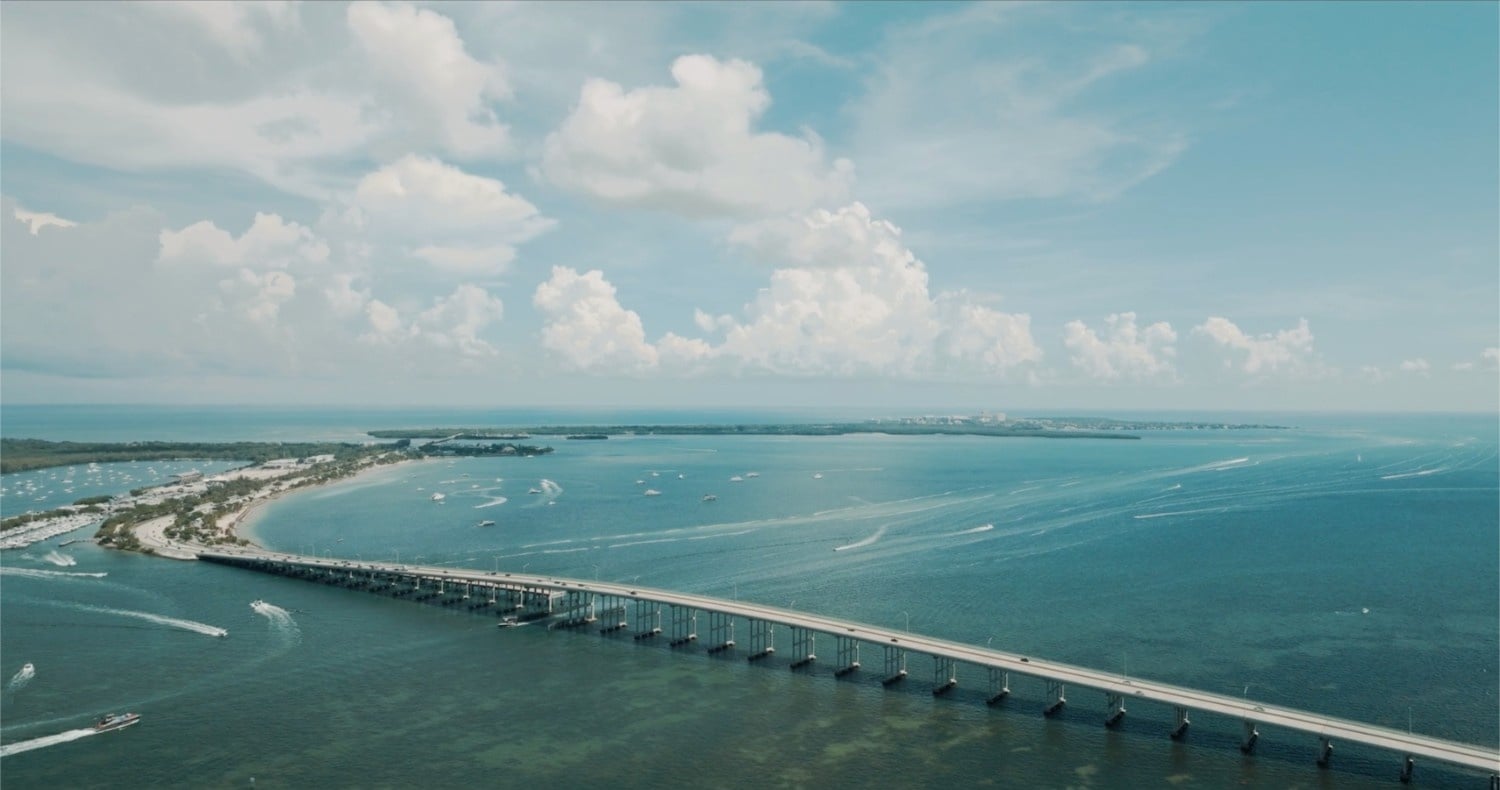
The Rickenbacker Causeway is the only way on or off the island by car, and it carries a toll each way, with resident and commuter annual plans available directly through Miami-Dade County. This single access point filters the buyer pool before anyone even books a showing.
People who choose Key Biscayne are, consciously or not, trading convenience for separation. A commute to Brickell that would take twelve minutes without the causeway can run thirty to forty-five during a Friday afternoon exodus in season. Buyers who need to be downtown by 8 a.m. sharp, five days a week, sometimes discover this the hard way after they've closed. The ones who thrive here have usually already decided the tradeoff is worth it, often because they work remotely, run their own business, or are retired.
There's a second-order effect worth knowing. Because the causeway limits through-traffic, the island doesn't get the cut-through congestion that neighborhoods like Coconut Grove or South Miami deal with from commuters using local streets as shortcuts. Crandon Boulevard carries island traffic and almost nothing else. This is part of why golf carts and bicycles are a genuine transportation mode here, not a novelty, and why some streets near Village Green Park see more foot and cart traffic than car traffic on a weekday afternoon.
Who Actually Buys Village of Key Biscayne Real Estate
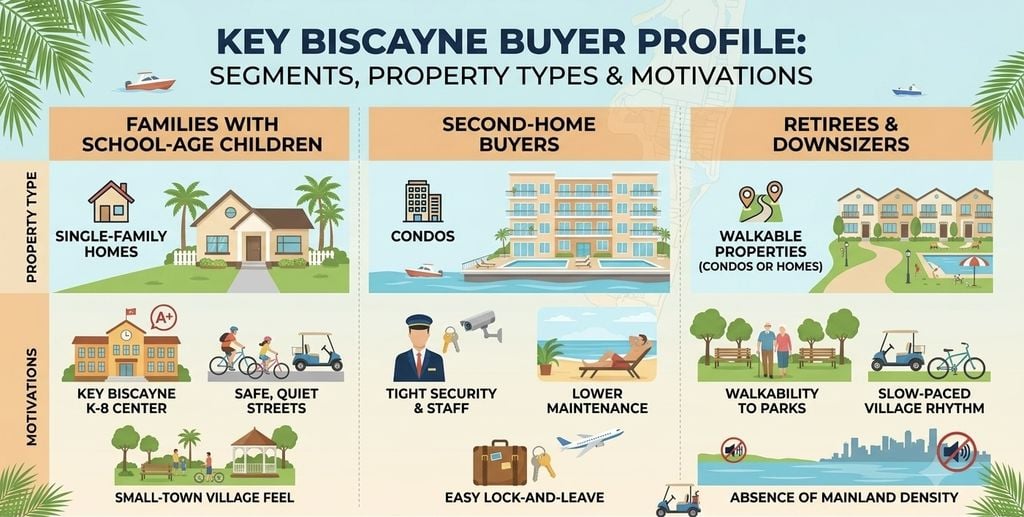
The buyer profile behind homes for sale in Key Biscayne, Florida splits into three groups, and they don't compete with each other for the same inventory.
Families relocating for the Key Biscayne K-8 Center make up a meaningful share of single-family purchases. The school draws consistently strong reviews from parents specifically for its size. It's small enough that teachers know every child by name, which matters more to some buyers than square footage or a renovated kitchen.
Second-home buyers, often from the Northeast or from Latin America, favor the condo corridor along Crandon Boulevard for exactly the reason families avoid it: less yard maintenance, tighter security, and a building staff handling the details while the owner is elsewhere ten months a year. A two-bedroom unit that closed near Crandon Boulevard earlier this year sold in nineteen days to a buyer relocating part-time from Bogota, largely because the building's staff and security profile matched what the buyer already expected from similar coastal markets abroad.
Retirees and downsizers round out the third group, drawn by walkability to Village Green Park and the absence of the density that comes with Brickell or South Beach. None of these three groups are shopping the same properties, which is worth knowing before you assume the typical buyer here looks like anyone in particular.
Insurance, HOA Approval, and the Financing Timeline Buyers Underestimate
Condo buyers on Key Biscayne run into a financing reality that single-family buyers on the island rarely face. Post-Surfside reserve requirements mean association boards now request full reserve studies and funding disclosures before a buyer's lender will clear underwriting, and that document request alone can add two to four weeks to a closing timeline if the association is slow to produce it.
Insurance is the second variable. Wind and flood coverage on a barrier island runs meaningfully higher than comparable coverage a few miles inland in West Kendall or Pinecrest, and some lenders now require proof of binder before they'll issue a clear-to-close, not just an insurance quote. Buyers who wait until the final week before closing to shop coverage sometimes lose their rate lock waiting on a binder that should have been requested at contract signing.
HOA approval timelines matter here in a way they don't in non-HOA single-family pockets of Miami-Dade. Several buildings along Crandon Boulevard require board interviews before closing, which is closer to how some cooperative buildings operate in the Northeast than to a typical Florida condo purchase. Buyers accustomed to a same-week Florida condo closing sometimes assume Key Biscayne will move at the same pace. It usually doesn't, and building that extra time into an offer's closing date protects both sides from a last-minute scramble.
Seasonal demand adds another layer most buyers don't anticipate until they're mid-search. Showings on single-family homes near the K-8 Center pick up sharply in late winter and early spring, timed to families who want to close before a new school year, which tightens competition on that inventory specifically rather than across the whole island. Condo activity along Crandon Boulevard follows a different calendar, peaking when snowbird buyers are physically on the island each winter and touring in person rather than relying on a listing agent's video walkthrough. A buyer touring in August will see less competition on a condo but may also find fewer active listings, since some sellers hold off listing until the season that actually brings buyers to their door.
How Key Biscayne Compares for Lifestyle Fit
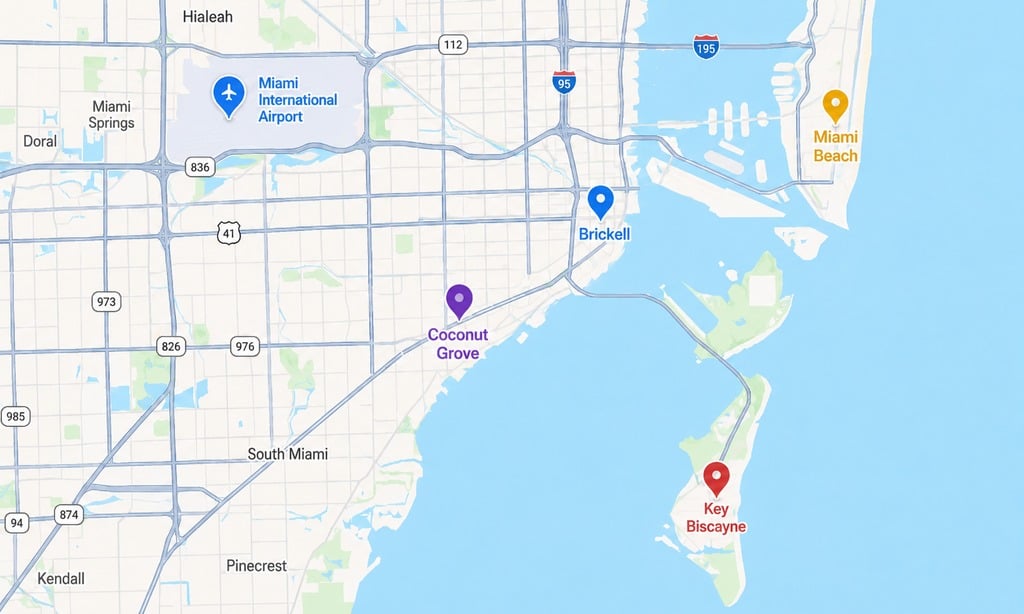
Buyers weighing Florida Key Biscayne real estate against Miami Beach are usually choosing between two different definitions of waterfront living. Miami Beach means nightlife, walkable restaurant density, and constant energy. Key Biscayne means quiet streets, a slower pace, and a genuine sense of separation from the mainland's noise, at the cost of that same nightlife and walkability.
Coconut Grove sits somewhere in between. It has more bohemian character and tree canopy than Key Biscayne, plus mainland access without a toll, but it also carries more cut-through traffic and a less uniform architectural feel block to block, since the Grove was never incorporated as a single governed village.
Brickell isn't really a competitor for the same buyer at all. It's vertical, urban, and built around walk-to-work convenience. A buyer cross-shopping Brickell condos against Key Biscayne single-family homes is usually still deciding between two entirely different lifestyles, not two versions of the same one, and that's a decision worth making consciously rather than by accident.
The Mistake Buyers Make Before They Even Call an Agent
The most common mistake isn't a pricing mistake. It's a fit mistake. Buyers spend weeks touring homes for sale in Key Biscayne Florida based on photos and specs, then discover during the actual visit that the causeway commute or the weekend beach traffic doesn't match their daily life. By then they've often already made and retracted interest on a property, which affects how sellers and their agents respond to that same buyer's next offer on the island. This is a small market. Reputations travel fast between listing agents here, and a buyer known for backing out mid-negotiation loses leverage on the next home they actually want.
The buyers who move fastest and negotiate from the strongest position are the ones who've already confirmed the village fits their life before they start touring. A five-minute drive across the causeway during rush hour and a Tuesday morning walk around Village Green Park, done before the first showing rather than after the third one, save weeks of wasted effort on both sides.
Starting Your Search for Florida Key Biscayne Real Estate
Once the Village itself makes sense for your life, the next question is pricing and inventory. That's the point where searching village of Key Biscayne real estate listings actually becomes productive, because you're no longer guessing whether the island fits, only what it costs. Current price ranges, how condo reserve requirements affect financing timelines in more detail, and what a realistic offer looks like right now all matter at this stage in a way they didn't before you'd confirmed the fit. Our guide to homes for sale in Key Biscayne Florida covers that ground in full.
If you're still comparing Key Biscayne against other areas for overall fit, our breakdown of which Miami neighborhood matches your lifestyle and our relocation framework for choosing where to live in Miami are worth reading first.
For current listings on the island itself, our Key Biscayne area page stays updated as inventory moves, and our VIP home search can flag new listings the moment they hit the market, before they show up on the major portals. Buyers who end up preferring the island's upper tier, oceanfront or near-oceanfront single-family homes, often also review our luxury homes in Miami page for comparable inventory across other waterfront pockets.
According to the U.S. Census Bureau, Key Biscayne's population has held remarkably stable for a South Florida coastal community, a signal about how consistently residents choose to stay once they've moved in rather than turning the market over quickly.
Florida Key Biscayne real estate isn't a harder market to understand than any other part of Miami-Dade. It's a market that rewards buyers who look past the listing photos first. The Village structure, the causeway, the school, the insurance and HOA approval timelines, and the weekday rhythm all shape whether a home here actually fits your life, and that's worth answering before you fall in love with a kitchen. Get that part right, and the pricing conversation that follows is a much shorter one.
FAQ
Q: Is Key Biscayne part of the city of Miami, or is it its own municipality?
A: Key Biscayne is its own incorporated village, separate from the city of Miami and largely self-governed apart from Miami-Dade County on day-to-day matters. It has operated its own police department and council since incorporating in 1991. For buyers, this means permitting, code enforcement, and zoning decisions run through village hall rather than a county office, which tends to move faster and more consistently than permitting elsewhere in Miami-Dade.
Q: What is day-to-day life like on Key Biscayne compared to mainland Miami-Dade?
A: Weekdays are quiet, with residential streets that see far less through-traffic than mainland neighborhoods because the Rickenbacker Causeway is the only access point. Weekends bring a different rhythm entirely, as Crandon Park and Bill Baggs Cape Florida State Park pull in mainland visitors by the thousands. Golf carts and bicycles are a genuine transportation mode here, not a novelty, since the island's limited through-traffic makes them practical for daily errands.
Q: Do I need a car on Key Biscayne, and what does the Rickenbacker Causeway toll cost?
A: Most residents keep a car since the causeway is the only route to the mainland, though many also use a golf cart or bicycle for local trips within the village itself. Toll pricing changes periodically, so buyers should confirm the current rate directly with Miami-Dade's tolling authority rather than relying on an older figure. Commute times swing widely by time of day, with Friday afternoon exits running noticeably longer than a typical weekday morning.
Q: Is Key Biscayne a good fit for families, or is it mostly retirees and second-home owners?
A: All three groups buy here, but they tend toward different inventory. Families relocating for the Key Biscayne K-8 Center lean toward single-family homes, while second-home buyers favor the condo corridor along Crandon Boulevard for lower maintenance. Retirees and downsizers are often drawn by walkability to Village Green Park. None of these groups compete heavily for the same listings, so a family shopping single-family inventory isn't really bidding against the second-home condo buyer.
Q: How does Key Biscayne compare to Miami Beach or Coconut Grove for daily lifestyle?
A: Miami Beach offers nightlife and walkable restaurant density that Key Biscayne doesn't try to match. Coconut Grove sits in between, with more bohemian character and tree canopy but also more cut-through commuter traffic since it was never incorporated as its own governed village. Key Biscayne trades that energy for quiet streets and a clearer sense of separation from mainland noise, which is either the whole appeal or a dealbreaker depending on the buyer.
If the Village itself feels like the right fit and you want a real answer on what fits your budget and timeline, start with our Buyers page and we'll walk through your search from there.
Check out this article next