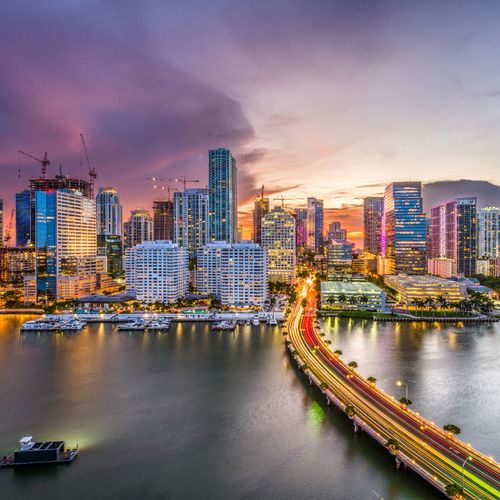

Everyone who looks at Miami from the outside sees the same thing: a hot market, rising prices, and strong demand. What they miss is how fragmented that market actually is, and how much that fragmentation matters when you're trying to invest in Miami real estate with a clear return in mind.
The investors who get it wrong almost always make the same mistake. They treat Miami-Dade as one market. They compare a Brickell branded-residence pre-sale to a Homestead single-family rental and try to apply the same underwriting logic to both. They can't. These are structurally different assets, in different demand pools, with different holding costs and different income profiles.
This guide covers what the Miami investment market actually looks like across the full spectrum, from entry-level single-family in the southwest corridor to ultra-luxury branded towers in the urban core. The goal is a clear picture before you commit a dollar.
Why Miami-Dade Keeps Pulling Capital From Every Direction
When serious investors evaluate real estate investment Miami Florida opportunities, the structural case for Miami-Dade runs deeper than most people outside the market realize. This is not a tourism economy propping up property values. The population growth driving long-term demand here is structural. Since 2020, Miami-Dade has absorbed hundreds of thousands of new residents, many of them high-income relocators from New York, California, and international markets. Prices have reset to reflect that shift and haven't retreated the way critics kept predicting.
A few factors make this market behave differently from other Sun Belt metros. Florida's no-income-tax environment genuinely affects where high-net-worth buyers choose to establish primary residency, and primary residents buy more property at higher price points. Port of Miami handles more cargo than any other port in the southeastern United States. Miami International Airport is the top U.S. gateway for Latin American air travel. These are infrastructure assets that underwrite the commercial activity, employment base, and population growth that support property values over time. Florida Realtors tracks Miami-Dade consistently among the state's strongest counties for median price performance year over year.
International demand adds another layer. Buyers from Venezuela, Colombia, Brazil, Argentina, and throughout Europe treat Miami-Dade as a currency hedge alongside a real estate purchase. A significant portion of this market's buyer pool is not interest-rate sensitive the way domestic buyers are. When U.S. purchase activity slows because rates move, international capital often stays active. Historically, this dynamic has put a floor under Miami prices in ways that inland Florida markets simply do not have.
The Investment Spectrum Here Is Wider Than Most Investors Expect
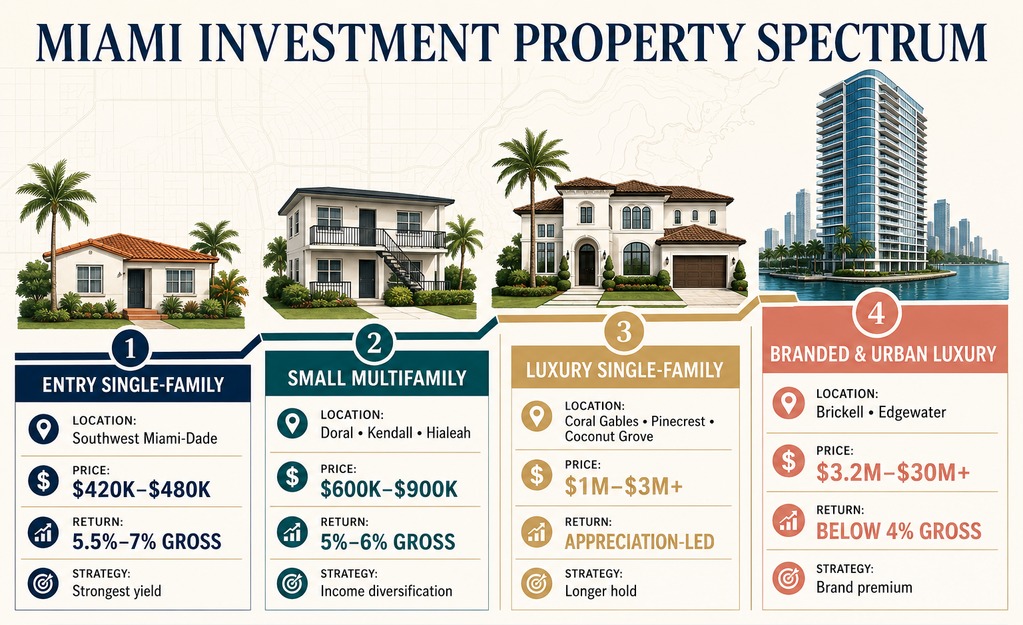
Miami-Dade has investable assets across a price range that runs from roughly $350,000 to well past $30 million. Each tier has its own logic, its own return profile, and its own risk set. Landing in the wrong tier for your capital base and goals costs more than just money. It costs time.
At the entry level, single-family homes in the southwest Miami-Dade corridor produce the strongest price-to-rent ratios in the county. A 3-bedroom, 2-bathroom home in that area trading at $420,000 to $480,000 can achieve gross rents of $2,400 to $2,800 per month depending on condition and specific location. Those numbers produce gross cap rates in the 5.5% to 7% range before insurance, taxes, and management costs, which is meaningful in a county where land-constrained urban areas have compressed yields well below that floor.
The middle tier, duplexes through fourplexes in areas like Doral, Kendall, and parts of Hialeah, is where serious buy-and-hold investors tend to concentrate their Miami investment properties searches. These assets combine residential financing eligibility, available on properties up to four units, with the income diversification of multiple tenants. The challenge is not finding demand. It's finding product. Well-maintained multifamily in established areas trades quickly and rarely sits long enough to negotiate.
For a detailed breakdown of multifamily options by area and price point, multifamily homes for sale in Miami covers active inventory across the county's key corridors.
Above the mid-market sits luxury single-family in Coral Gables, Pinecrest, and Coconut Grove, where land values and price floors are maintained by top-ranked school districts and structural inventory constraints. Investors in this tier are typically playing appreciation, not yield, and they need a long hold window and a specific buyer profile on exit.
Invest in Miami Real Estate at the Luxury Branded Tier
Pre-construction branded residences are one of the most distinctive investment categories in Miami-Dade, and one of the most consistently misunderstood.
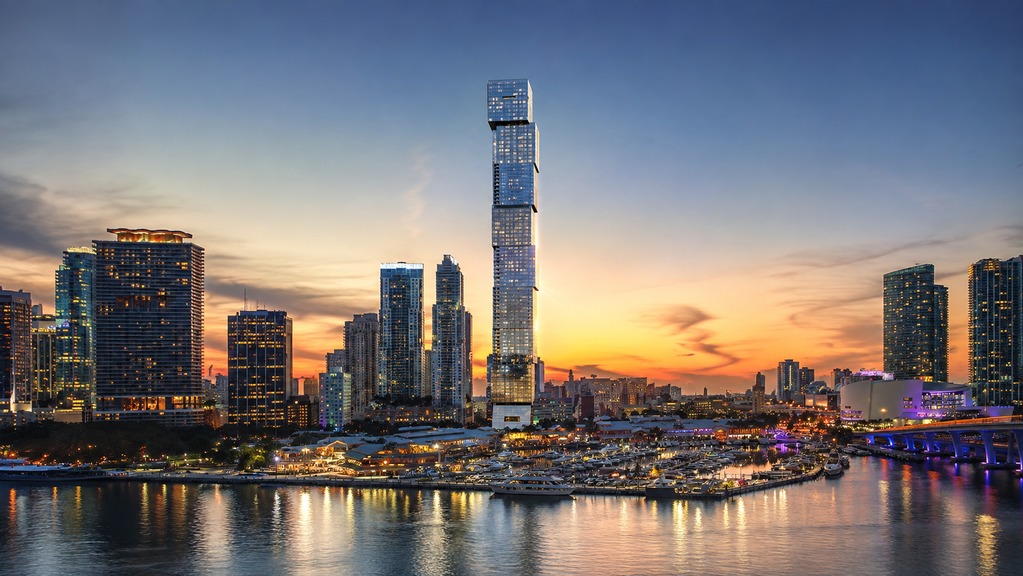
The Waldorf Astoria Hotel and Residences at 300 Biscayne Boulevard in downtown Miami is Florida's first supertall skyscraper, rising 1,049 feet across 100 stories. As of mid-2026, the tower has passed its 75th floor and is tracking toward structural topping-out before year's end, with full completion targeted for 2028. The project has been more than 90% sold since early in its sales cycle. Residences now start at $3.2 million for two-bedroom units, and one-bedrooms are gone. Buyers who contracted in 2021 at the original sales launch captured substantial price appreciation before ever taking a key. The gap between contract price and current market value is the investment thesis for pre-construction entry in a major branded tower when the developer has the track record to deliver.
Here is the part most pre-construction guides skip: the original completion window for the Waldorf Astoria was 2025 to 2026. It is now 2028. Buyers who modeled around that delivery timeline absorbed a 2 to 3 year extension on illiquid capital that was not in their original plan. The return on a well-positioned branded tower pre-sale can be significant. The schedule risk is equally real, and investors need to model it honestly before signing. For more on what's currently moving in the pre-construction pipeline across Miami-Dade, new construction homes in Miami-Dade County covers active opportunities at multiple price tiers.
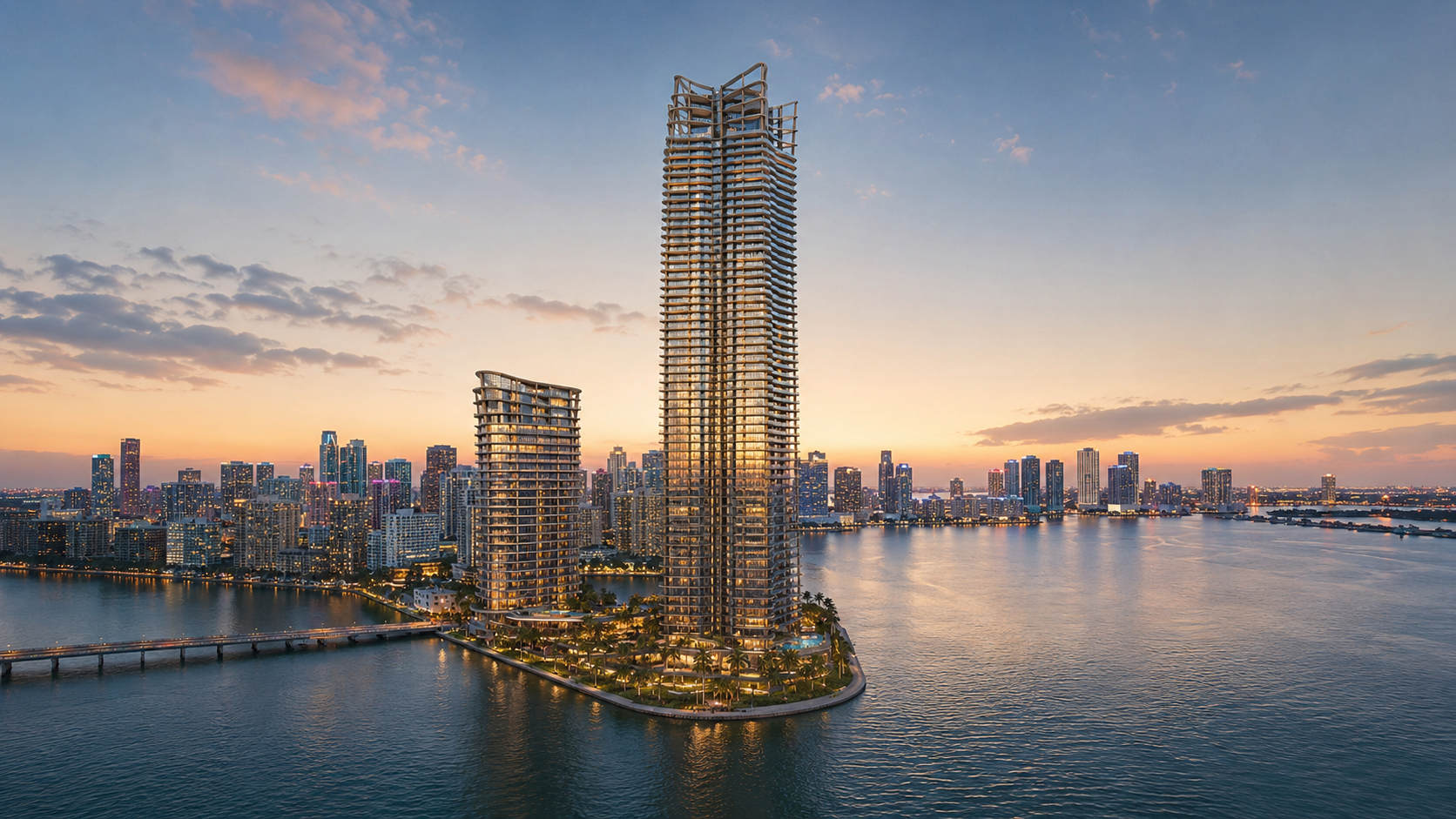
The Residences at Mandarin Oriental on Brickell Key operates on a different investment thesis entirely. The original Mandarin Oriental Hotel, which anchored the island for more than two decades, was demolished by controlled implosion in April 2026 to clear the site. Developer Swire Properties, the firm behind Brickell City Centre, is building two towers in its place: a 66-story South Tower with 228 private residences, and a North Tower housing Mandarin Oriental's new North American flagship hotel alongside additional residential units. The project has recorded $1.3 billion in residential sales. Two penthouse units closed in early 2026 at $49.9 million each, setting a mainland Miami record at approximately $6,300 per square foot. Groundbreaking is targeted for late 2026, with completion in 2030.
The investment case at Mandarin Oriental is not a hotel income program. It is brand premium, Brickell Key's island scarcity, and Swire's demonstrated track record. Brickell Key is a private island connected to the Brickell financial district by a single bridge. There are no comparable sites waiting behind it.
Edgewater has also emerged as a legitimate destination for this category. Branded towers along Biscayne Bay are drawing buyers who want waterfront exposure and proximity to Wynwood and Midtown without the density and traffic of Brickell. The market there is younger in its branded-tower cycle, which means buyers in the right projects are still entering at pre-saturation price points.
For investors who want to go deeper on the Brickell condo investment landscape beyond the branded tier, Condos Miami Brickell: The Investor's Edge Portals Miss covers the building-by-building detail that generic property searches don't surface.
One number every pre-construction buyer in this tier needs to model carefully: deposit structures on luxury branded towers typically require 50% to 60% of the purchase price before completion, paid in staged installments across the construction period. The Mandarin Oriental runs from a late 2026 groundbreaking to a 2030 completion. Four years of illiquid capital in the best-case scenario. The Waldorf Astoria already demonstrated how that window can extend. Investors who need liquidity within a defined period should focus on completed resale inventory instead. Luxury homes for sale in Miami surfaces completed options in the luxury tier that close on a conventional timeline.
The Affordable Entry That Out-of-State Investors Keep Overlooking
Homestead draws a specific type of investor: someone who has run the actual numbers and realized that price-to-rent ratios in Miami's urban core stopped producing meaningful yield several years ago.
The southwest Miami-Dade corridor, running from Cutler Bay through Homestead and into Florida City, is one of the fastest-appreciating markets in the county by percentage gain. Rental demand there is consistent because the workforce supporting Miami-Dade's logistics, agricultural, and service sectors is concentrated in that area, and that workforce needs housing close to where it works.
A client purchased a 4-bedroom, 2-bathroom single-family home in Homestead in late 2023 for $465,000. After a $28,000 cosmetic renovation, the property rented for $2,800 per month within three weeks of listing. Gross annual income came to $33,600 against a total basis of $493,000, producing a gross cap rate just above 6.8% before operating expenses. Compare that to a comparable home in Doral or Kendall at $680,000 with monthly rents of $3,200. The gross cap rate in that mid-market tier lands closer to 5.6%, and that 120-basis-point spread is the reason serious investors have been redirecting capital into this corridor for the past four years. Verify current assessed values and property history for any specific address through the Miami-Dade Property Appraiser before you run your underwriting numbers.
The interest in Miami investment properties in this corridor accelerated sharply after 2021, when capital that had been concentrating in compressed urban markets started flowing toward areas that could still produce real yield. Inventory has absorbed that interest and buyer competition is real. Off-market relationships and early positioning matter here more than at any other price tier in the county.
The risk that out-of-state buyers consistently miss is insurance. Property insurance in high-wind and flood-zone areas of Miami-Dade, which covers meaningful portions of the Homestead corridor, has repriced sharply since 2022. Annual premiums on a typical single-family home in this area now run $5,000 to $9,000 per year. At the lower price points common in this corridor, that is a material operating cost that compresses projected yields quickly. Model it with a current binding quote, not a national average, before you make any offer.
What Miami's Operating Environment Does to Your Actual Returns
The deal is not what you pay at closing. The deal is what you net across the hold period, and Miami-Dade has enough operating variables to shift that number significantly in either direction.
Insurance
Florida's property insurance market went through a structural repricing between 2021 and 2024. In coastal and high-wind-zone areas, which cover substantial portions of Miami-Dade, annual premiums on single-family homes now run between $6,000 and $15,000 depending on construction age, roof type, and proximity to water. For investors modeling cash flow, a $10,000 annual insurance bill on a $550,000 property represents roughly 1.8% of asset value as an annual operating cost before any other line item. A national average premium number will produce projections that don't survive contact with a real quote.
HOA and Special Assessment Exposure
Vertical buildings in Brickell, Edgewater, and along the Miami Beach barrier islands carry monthly HOA fees ranging from $800 to well over $4,000 per unit. Post-Surfside legislation in Florida now requires all condominium associations to complete structural reserve studies and fund those reserves to adequate levels. Buildings that deferred maintenance for years are now issuing special assessments, some running into the tens of thousands per unit. Request the most recent reserve study and two years of association meeting minutes before contracting on any vertical building. Those documents will tell you more about the building's financial health than any listing description.
Foreign Buyer Behavior
International buyers in this market negotiate differently from domestic buyers. They are often cash buyers, which makes them less sensitive to interest rate movements and faster to close when they decide to act. On luxury assets in Brickell and Sunny Isles, waived inspection contingencies and short closing timelines are baseline expectations on competitive offers from the international side. Domestic investors competing in that space need to understand that dynamic before they write a first offer.
Seasonal Demand Patterns
Miami-Dade's peak demand window runs November through April. Listings launched in that window see materially more foot traffic, faster offer timelines, and stronger final pricing than summer launches. For investors planning a buy-renovate-sell exit, the calendar affects the outcome as much as the renovation budget. A property hitting the market in February in move-in condition will close faster and at a higher price than an identical property listed in August. Plan renovation timelines around that window, not around when the work happens to finish.
How to Invest in Miami Real Estate Without Paying for the Learning Curve
Every market has a learning curve. Miami's is steeper than most because the variables that drive outcomes here are local in ways that don't transfer from other markets. Insurance underwriting by building and zip code, condo association financial health, pre-construction developer track records, foreign buyer competition, and micro-market dynamics that shift block by block are knowledge sets that take years to develop from the inside.
Working with a broker who understands investment underwriting shortens that curve considerably. I hold a Florida real estate broker license, a mortgage broker license, and a title agent license. In practice, that means I can help an investor evaluate a deal from offer strategy through financing structure and through closing, without handoffs to three separate professionals who may not be communicating efficiently. Before committing capital, run the basic financing math on our mortgage calculator to stress-test your assumptions on debt service and net cash flow before you start shopping.
The real estate investment Miami Florida landscape has shifted significantly over the past few years. Capital that used to park in secondary markets is now competing directly in Miami-Dade, which means local knowledge is a sharper edge than it has ever been. Over $100 million in closed transactions across Miami-Dade has given me a working understanding of which buildings carry healthy reserve studies and which ones are heading toward a special assessment, which Homestead streets sustain consistent rental demand and which ones don't, and where buyer competition is concentrating before it shows up in the data.
Investors who enter this market with the right guidance make better first decisions. If you're serious about how to invest in Miami real estate, the conversation starts with knowing exactly what you're buying, at what price, and why that price makes sense.
FAQ
What is a realistic starting budget to invest in Miami real estate in 2026?
A: Getting into this market meaningfully starts at around $400,000 for single-family homes in Homestead and the southwest Miami-Dade corridor, where price-to-rent ratios still support buy-and-hold math. Mid-market multifamily, duplexes through small fourplexes in Doral or Kendall, runs $600,000 to $900,000. Luxury branded residences start at $1 million for completed resale inventory in Brickell, and pre-construction at towers like the Waldorf Astoria now begins at $3.2 million. The number that matters most is not just the purchase price. Factor property insurance, HOA reserves, and financing costs before settling on your target range. Those operating variables shift the real cost of entry significantly across Miami-Dade's tiers.
How do HOA fees and special assessments affect cash flow in Miami investment properties?
A: In Miami-Dade's vertical buildings, HOA fees are a serious line item, ranging from $800 to more than $4,000 per month depending on the building and its amenities. Post-Surfside, Florida law now requires all condominium associations to complete structural reserve studies and fund reserves to adequate levels. Buildings that deferred maintenance for years are now issuing special assessments, some running into the tens of thousands per unit. Before contracting on any condo investment, request the current reserve study and two years of association meeting minutes. Those two documents will tell you more about the building's actual financial health than any listing description or broker pitch.
Can foreign nationals buy investment property in Miami, and are there extra steps involved?
A: Foreign nationals face no legal restrictions on purchasing real estate in Florida, which is a meaningful factor in why Miami-Dade attracts international capital at the scale it does. The primary extra step is tax-related: FIRPTA, the Foreign Investment in Real Property Tax Act, requires withholding of up to 15% of the gross sale price when a foreign person sells U.S. real property. Financing also requires additional documentation for non-resident buyers, and many international investors purchase cash to sidestep that complexity. Working with a broker experienced in international transactions makes the closing process more manageable. Confirm your specific tax exposure with a qualified tax advisor before closing.
What makes a luxury branded residence different from a standard condo as an investment?
A: Branded residences command a price premium over comparable unbranded buildings, typically 20% to 40% depending on brand strength and developer credibility. That premium reflects international brand recognition that widens the resale buyer pool globally, a service level that commands higher rents in the private rental market, and the developer's track record for delivering what was promised at contract. Exit liquidity on a well-positioned branded tower is meaningfully stronger than on an unbranded building, because buyer demand on resale extends far beyond the local Miami pool. The Mandarin Oriental Residences on Brickell Key illustrated this directly: penthouse units closed at approximately $6,300 per square foot, setting a mainland Miami record.
Which areas of Miami-Dade offer the strongest rental yields for buy-and-hold investors right now?
A: Homestead and Florida City consistently produce the strongest gross rental yields in the county, with well-selected single-family homes running 6% to 7% gross before operating costs. Hialeah offers solid demand at lower acquisition prices than comparable South Florida markets. Doral and Kendall sit in the mid-range at 5% to 6% gross, with stronger appreciation upside. Brickell and Edgewater are appreciation plays, not yield plays. Cap rates in those urban core buildings run below 4% gross, and buyers entering that tier need a long hold window and patience for the income to materialize.
If you want to see what's actually available across Miami-Dade's investment tiers right now, the VIP Home Search gives you direct access to active inventory, from multifamily in Doral and Kendall to pre-construction opportunities in Brickell, with no form submission required to start searching.
Check out this article next