

Most owners assume a seven-figure sale is just a bigger version of a normal one. Price it high, wait for a wealthy buyer, collect the check. Knowing how to sell a luxury home in Miami is nothing like that, and the sellers who learn the difference the hard way are the ones who watch their listing sit for six or nine months while the number quietly bleeds down. The top of this market has fewer buyers, thinner data, and far more scrutiny per showing. Get the launch wrong and you do not just lose time. You lose the leverage that only exists in the first few weeks. What follows is how the high end actually behaves in Miami-Dade, and where the real money is won or lost.
Why How to Sell a Luxury Home Is a Different Game
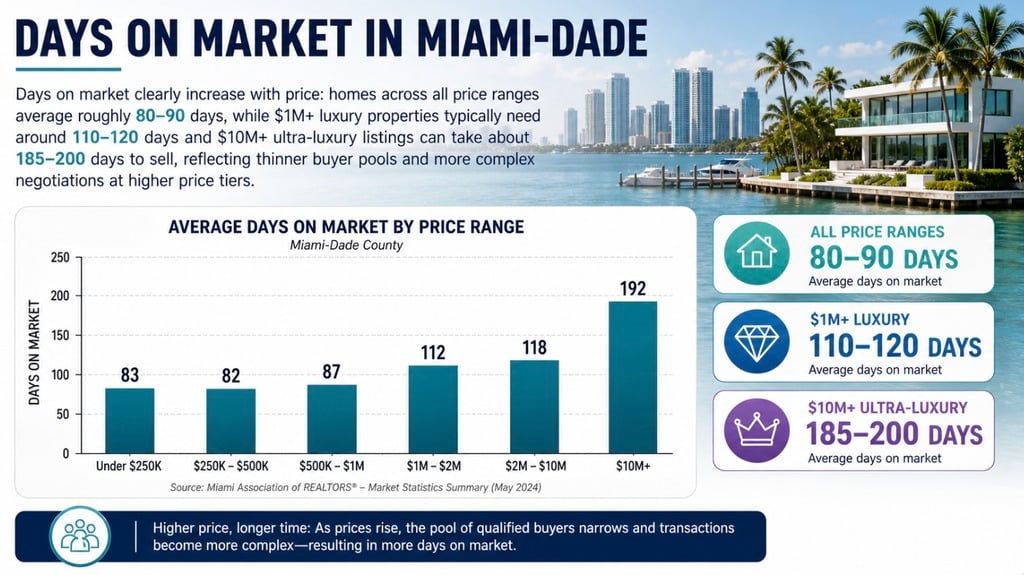
Below roughly $1M in Miami, you are selling into a deep pool. Above $2M, that pool shrinks fast, and above $5M it becomes a handful of qualified people who could be anywhere in the world on any given week.
Fewer buyers means longer days on market. A well-priced Kendall home might see ten showings its first weekend. A Coral Gables estate can wait weeks for three. A slow start is not a failure of the property. It is the math of the tier, and it is the first thing most sellers misread.
Here is the piece that catches people. Because luxury sits still longer by nature, sellers treat a slow first month as normal and hold a bad price too long. The listing goes stale, and stale is expensive at every level but brutal at the top. The first time you sell a luxury home, the instinct is to defend the asking number. The market rewards the opposite instinct, which is to price for real movement early while your listing is still fresh.
There is also a psychology gap between what an owner believes their home is worth and what a qualified buyer will actually wire. At the top of the market that gap is wider, because the emotional attachment is deeper and the objective anchors are fewer. Closing that gap before you list is the single most valuable thing a seller can do.
Preparation: What Luxury Buyers Actually Scrutinize
A luxury buyer is not touring a home. They are auditing a lifestyle and looking for reasons to negotiate. Every deferred repair becomes a bargaining chip, and at these price points a single chip can be worth tens of thousands of dollars.
Before I list at this level, I order a pre-listing inspection so there are no surprises during the buyer's due diligence. I also pull permit history on every renovation, because an unpermitted addition on a Coconut Grove waterfront property can stall a closing for weeks while title and lenders sort it out. At the luxury tier, buyers bring their own inspectors, their own attorneys, and often their own contractors to a showing. Anything you have not addressed, they will find.
Staging matters differently here too. You are not filling square footage. You are selling how it feels to live in Gables Estates or on a Pinecrest acre near Pinecrest Gardens. The best tips for selling luxury homes start before a single photo is taken, because presentation at this level is the marketing. Skip the prep and you invite the exact scrutiny that erodes your number. Good tips for selling luxury homes always trace back to removing the buyer's reasons to doubt, because doubt at this level is not a small discount. It is a renegotiation.
How to Sell a Luxury Home Without Anchoring Your Price
Pricing is where how to sell a luxury home gets genuinely hard. In a normal sale, three recent comparables tell you the number. At the top, those comparables barely exist, and the ones that do are often stale or so distinct they teach you little. Two waterfront estates a block apart can differ by millions based on dock depth, lot orientation, and renovation quality that no automated model captures.
I represented the buyer and later the seller on 8202 Los Pinos Cir in Coral Gables. It closed at $2.65M after 280 days on market. This is not a cautionary tale about a bad property. It is an honest look at how the luxury tier behaves when the comparables are thin and the buyer pool is patient. Nearly ten months on market is not unusual up here, and pricing has to respect that reality instead of fighting it. Representing the same property on both the purchase and the resale gave me a rare view of exactly how the value moved and what the eventual buyer was truly paying for.
Overprice a luxury listing and you do not just wait longer. You train the market to see your home as the one that will not budge, and every week of stale days on market invites a lower offer than you would have gotten in week two. Understanding how to maximize profit selling luxury home means pricing to generate real activity early, not to protect a fantasy number that the data cannot support. A listing that draws serious showings in its first three weeks confirms your price. One that draws silence is telling you something, and the sellers who listen keep more money.
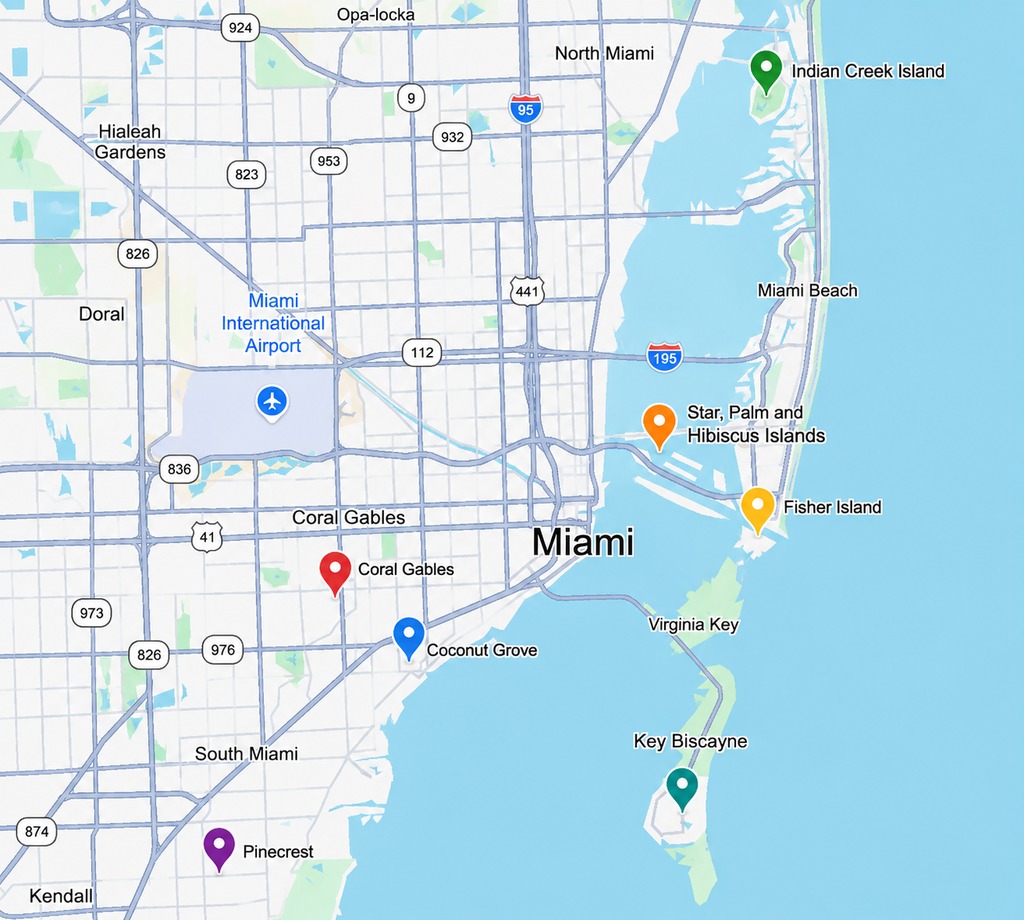
Private-island assets are their own universe. Star Island, Indian Creek Island, and Fisher Island trade on records rather than comparables. When Indian Creek sets a nine-figure benchmark, it does not tell you what a financeable estate in South Miami is worth. Pricing at this rarefied level is about the buyer in front of you and the story of the asset, not a spreadsheet of recent sales.
Marketing That Reaches the Actual Buyer
Portal photos sell the middle of the market. They lose the top of it. A luxury buyer is not scrolling Zillow at midnight hoping to find their next home. They are reached through relationships, private networks, and quiet channels that never touch a public search bar.
Learning how to sell luxury homes in Miami means understanding that the right buyer is often introduced, not advertised to. The honest answer to how to sell luxury homes at this level is that distribution is a relationship business. Off-market and whisper listings let me test a price with serious people before the clock on public days on market ever starts. Once you go live, the first impression is permanent, so a soft pre-launch protects your leverage rather than spending it.
This is the point where working with the right agent stops being a formality. When I sell a luxury home in Coral Gables or Coconut Grove, I am not waiting for the portal to do the work. I am reaching foreign buyers, private-wealth advisors, and the small circle of agents who actually control high-end buyers in this county. If you want a sense of how the high end presents at scale, the luxury market in Miami Beach shows how differently these properties are positioned. And before you list anything, it helps to understand the standard Miami selling process so you can see exactly where the luxury tier diverges from it.
Negotiation and Closing at the High End
Luxury deals close differently. A large share of high-end Miami sales are all cash, which removes the appraisal and financing risk but changes the leverage. A cash buyer expects a discount for speed and certainty, and knowing when to hold and when to give is where an experienced agent earns the fee. The typical cash discount in Miami-Dade runs a few percentage points, but on a multimillion-dollar home a few points is real money, so every term matters.
Foreign buyers add another layer. Many negotiate hard on the opening number as a matter of custom, then move quickly once respected. Reading that rhythm is the difference between a closed deal and a stalled one. Push back too rigidly and you lose them. Fold too early and you leave six figures on the table. The negotiation is cultural as much as financial.
Closing is also where your net gets protected. The line between your sale price and what lands in your account is full of items that are negotiable at this level. Reviewing what you actually keep after closing before you accept an offer keeps you from optimizing the headline number while giving away the net. Buyers at this tier will structure the deal to their advantage if you let them, from survey and title costs to closing dates that shift the tax year.
Please note that I am a licensed Florida real estate broker, not a CPA or a tax attorney. The points below on taxes are general and should be confirmed with your own tax professional.
Miami-Specific Depth: What Moves the Top of This Market
Three forces shape the high end here in ways that surprise most sellers.
Insurance now drives timing. Florida's hardened insurance market means even cash buyers scrutinize wind mitigation, roof age, and flood exposure before they commit. A clean insurance profile can move a Coconut Grove or Miami Beach deal weeks faster, and a messy one can kill financing on a buyer who did plan to borrow against the asset. Sellers who gather their wind mitigation report and roof documentation before listing remove a common source of last-minute delay.
Seasonality is real and price-dependent. The luxury window in Miami-Dade concentrates from late fall through early spring, when out-of-state and international buyers are in town escaping colder markets. Listing a $5M home in July is a choice you make only with a specific reason, because your natural buyer may not be in the state.
Foreign-buyer behavior is its own discipline. The high tax exclusion available on a primary residence rarely applies to these sellers, so structuring matters. For capital gains context at this level, see capital gains at the high end. You can also verify local sale records and assessed values through the Miami-Dade Property Appraiser, and review current market data through Florida Realtors. For the federal primary-residence rules, the IRS guidance on home sales is the authoritative source.
None of this is guesswork for me. Knowing how to sell a luxury home in Miami is the product of representing these deals on both sides, from the buy to the eventual resale, and understanding how to maximize profit selling luxury home in a market where one wrong week of pricing can cost six figures.
If you are weighing a sale at the top of this market, the single most useful first step is a real number. If you want to know what your home is actually worth right now and how the luxury tier would treat it, a free home valuation takes about a minute and gives you a grounded figure to plan around.
FAQ
Q: How long does it take to sell a luxury home in Miami?
A: Expect a longer runway than the general market. Standard Miami-Dade listings often move in weeks, but luxury properties above $2M can sit for several months by nature of a smaller buyer pool. The Coral Gables sale I handled at 8202 Los Pinos Cir closed at $2.65M after 280 days. Well-priced luxury homes launched with real marketing tend to attract serious interest faster, while overpriced ones simply age on the market until a cut becomes unavoidable.
Q: Should I list my luxury home off-market or on the MLS?
A: Both have a place, and the right call depends on your goals. An off-market or whisper phase lets me test pricing with serious buyers before the public days-on-market clock starts, which protects your leverage. Going straight to the MLS gives maximum exposure but makes your first impression permanent. For many high-end Coral Gables and Coconut Grove sellers, a quiet pre-launch followed by a strong public debut captures the upside of both approaches without wasting early momentum.
Q: Do luxury homes in Miami sell mostly to cash buyers?
A: A large share do. Cash removes appraisal and financing contingencies, which speeds closing but shifts leverage toward the buyer, who expects a discount for that certainty. Foreign buyers are especially common at the top of the Miami-Dade market and frequently pay cash. Accepting cash does not mean accepting a lowball. It means your pricing and negotiation strategy has to account for the speed-versus-price tradeoff that cash buyers bring to the table.
Q: How do I price a luxury home when there are no recent comparables?
A: Thin data is the defining challenge of the tier. Rather than forcing three shaky comparables into a formula, I weigh active competition, absorption rates, the specific features that command a premium, and where private-island benchmarks from Star Island or Fisher Island sit relative to financeable inventory. Pricing here is about generating genuine early activity, because a listing that draws real showings in its first weeks confirms the number far better than any comparable set ever could.
Q: What does it cost to sell a luxury home in Miami-Dade?
A: Beyond commission, budget for pre-listing inspections, professional staging, high-end photography, and often title and closing items that become negotiable at this level. On a multimillion-dollar sale, the gap between your contract price and your net proceeds can run into six figures, so reviewing a detailed net sheet before accepting any offer is essential. Getting the net right often matters more than squeezing the last dollar out of the headline price.
Please note that I am a licensed Florida real estate broker and not a CPA or tax attorney. Any tax or legal points above are general in nature. Confirm specifics with a qualified professional before you make decisions.
If you want to know what your home is actually worth right now and how fast you could realistically close at the top of this market, a free home valuation takes about a minute and gives you a real number to work with.
Check out this article next