
Most people looking for real estate agents in Miami Beach search the same way they would search for an agent anywhere: reviews, referrals, whoever answers the phone. That process works fine in a generic market. Miami Beach is not a generic market.
This is a city where the building matters as much as the unit. Where a condo board can delay your closing by 30 to 45 days if the application package isn't submitted correctly. Where flood zone designations and post-Surfside reserve requirements can change what a lender will finance, sometimes mid-transaction. And where a significant share of buyers come from outside the country, bringing their own negotiating style and financing structure to the table.
What separates the top real estate agents in Miami Beach from everyone else is not a license or a review count. It's how many of those moving parts they have personally managed, and how well they understand the specific mechanics of this city's condo market, its international buyer pool, and its regulatory environment. This guide was written by someone operating at that level. It walks you through what to look for, what to ask, and what the red flags actually sound like, so you can make a decision you won't regret once the contract is signed.
Miami Beach Is Its Own Market, Not a Miami Neighborhood
There is a tendency to treat Miami Beach as part of the broader Miami-Dade real estate market, and statistically, it is. But practically speaking, the transaction process, the product type, and the buyer pool are different enough that they require different expertise. Agents who work this market at the top level understand that distinction before the first showing.
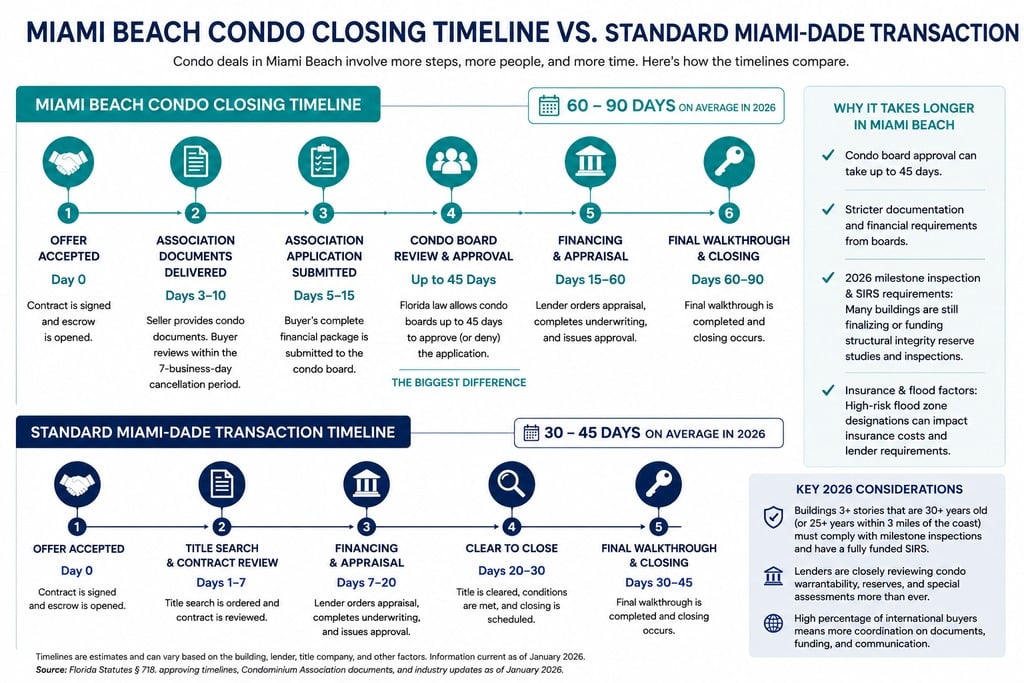
The overwhelming majority of residential properties in Miami Beach are condominiums. That means condo association rules govern almost every transaction. Depending on the building, a buyer's financial package must be submitted and approved by the board before closing can occur. Some approvals take two weeks. Others run the full 45 days that Florida law permits condo boards to review an application. Miss a document, submit an incomplete package, or fail to notify the board within the right window, and you're looking at a delayed closing or a terminated contract.
The post-Surfside regulatory landscape adds another layer. Buildings three stories or higher that are 30 years old, or 25 years if they sit near the coast, are now required to undergo structural milestone inspections and maintain funded Structural Integrity Reserve Studies. As of early 2025, only about half of Miami-Dade condominiums were in compliance with SIRS requirements. For a buyer, that gap matters: a building out of compliance may face lender restrictions, higher special assessments, or both. An agent who isn't tracking which buildings have completed these studies is going to have a harder time protecting you.
Then there's the flood zone reality. Much of Miami Beach sits in FEMA high-risk flood zones, which affects insurance premiums directly. A unit that looks affordable on paper can become significantly more expensive once Citizens Property Insurance coverage and required flood policies are added to the monthly cost picture. This is not a Miami-Dade-wide issue. It is concentrated in coastal areas, and Miami Beach is ground zero.
If you want a broader sense of how Miami Beach compares to other areas across the county, the Miami Beach area guide at Labrada Realty breaks down what makes this market distinct from Brickell, Coconut Grove, or Coral Gables.
What a Top Miami Beach Agent Actually Does on Your Deal
The job description of a top Miami Beach real estate agent is broader than most buyers and sellers expect. It's not just finding the property or marketing the listing. On the buying side, a competent agent is managing at least four simultaneous tracks once a contract is signed. An agent operating at the highest level stays ahead of all four without being asked.
The Association Track
Within days of going under contract, your agent should be pulling the condo documents, reviewing board meeting minutes for pending special assessments, checking the building's litigation history, and helping you submit a complete association application. Florida law gives a buyer seven business days to void a contract after receiving condo documents. An agent who doesn't walk you through those documents, or who waits too long to flag a problem, costs you the ability to exit cleanly.
The Financing Track
Not every lender is familiar with Miami Beach condo warrantability. Fannie Mae and Freddie Mac maintain watch lists of condo projects that don't meet their underwriting standards, and several Miami Beach buildings have appeared on those lists at various points due to high investor concentration, litigation, or deferred maintenance. A buyer whose agent connects them with a lender who hasn't done their due diligence on the specific building often finds out at the worst possible time that conventional financing isn't available. Portfolio lenders and DSCR loan products exist for situations like this, but the agent needs to know to ask.
The Title Track
Miami Beach transactions frequently involve foreign sellers, estate sales, or entity-owned properties, all of which add complexity at the title stage. A clear title commitment, lien searches, and HOA estoppel letters need to be ordered and reviewed early. Delays here are common and expensive. For sellers, outstanding liens from assessment non-payment are one of the most frequent surprises that surfaces at closing. Knowing the hidden costs that come with Miami real estate transactions is part of what a top agent prepares you for before you ever open a contract.
The Negotiation Track
Median sale prices in Miami Beach have hovered around $635,000 to $750,000 depending on property type, but the spread within the market is enormous. Luxury condos in South Beach or Mid-Beach have been selling at $600 to over $2,800 per square foot in premium buildings. Homes in that range sell for approximately 7% below list price on average, which means there is room to negotiate, but only for buyers whose agents understand which buildings and which price points have the most leverage. An agent quoting Zillow estimates in a building where the last six sales all closed at different price-per-square-foot levels due to view, floor height, and finishes is going to give you bad guidance.
The Questions Most Buyers and Sellers Never Think to Ask
A first conversation with a Miami Beach real estate agent should feel like an interview, because it is. Here are the questions worth asking, and why each one matters in this specific market.
- How many transactions have you closed in Miami Beach in the last 12 months, and in which buildings? Not Miami-Dade overall. Miami Beach specifically. An agent active in Hialeah who occasionally takes a Miami Beach listing is not the same as someone running multiple deals per year in specific buildings who knows the board personalities, the management company, and the common sticking points. The best realtors in Miami Beach can answer this without hesitating.
- Are you familiar with the SIRS compliance status of the buildings I'm considering? A yes followed by a blank look is not the right answer. This question separates agents who are current on the post-Surfside regulatory environment from those who are not. Buying into a non-compliant building without understanding the financial exposure is a real risk.
- Who do you typically work with on the lending side for Miami Beach condos? The right answer includes at least one portfolio lender or a lender who specializes in non-warrantable condo financing. If the answer is "whoever the buyer brings," that's a signal the agent hasn't navigated enough complicated financing situations in this market.
- What's your experience with foreign buyer transactions? A substantial portion of Miami Beach buyers are international. Wire transfer protocols, FIRPTA withholding obligations, and currency timing all affect how a deal is structured. An agent who has never managed an international closing will not know what they don't know until a problem surfaces.
- Can you walk me through the association approval process for the building I'm interested in? Listen for specific knowledge: how long the board typically takes, what documents they require, whether they conduct interviews, and what the common reasons for rejection are. If you're buying a condominium, this timeline directly affects your closing date and your financing lock period.
For buyers entering the Miami Beach market for the first time, it's worth reading through some general first-time homebuyer guidance for Miami before those conversations so you're already thinking in the right framework.
Red Flags That Are Easy to Miss in a First Conversation
Most agents who are not the right fit for a Miami Beach transaction will not present as obviously unqualified. The red flags are subtler than that.
Pricing from automated tools. If an agent opens a listing conversation by referencing Zillow or Redfin estimates as a benchmark, that's a meaningful warning sign. Automated valuations notoriously struggle with condo markets where floor height, view corridor, renovation quality, and building reputation create enormous price differences between units with similar square footage. An agent who relies on these tools for pricing strategy is going to either overprice a listing into a stall or underprice it and leave money behind.
Vague answers on HOA timelines. When asked about association approval timelines, a well-prepared agent should be able to name the building management company, describe the typical application package, and give you an honest range for how long the board takes. "It usually takes a few weeks" is not a specific answer. In a market where financing lock periods and closing deadlines are coordinated around that timeline, vagueness costs money.
No knowledge of building-specific issues. Every significant building in Miami Beach has a reputation among agents who work there regularly. Some have ongoing litigation with the developer. Some have high special assessments in the pipeline. Some have investor caps that limit financing options. An agent who doesn't already know the reputation of a building before showing it to you is working without the information that protects your offer.
Overconfidence on price. In a market where Miami Beach homes are currently selling at a median of around 7% below list price, and where days on market have stretched to 130-plus days on average, a seller's agent who promises a fast sale at full price without a clear strategy is not being honest with you. The market has shifted toward buyers in most price points. Realistic guidance now prevents a painful price reduction two weeks into the listing.
These same patterns show up in other contexts too. The broader piece on mistakes buyers make that cost them the most covers some of the downstream consequences of starting with the wrong representation.
Why Alberto Labrada Is the Agent Miami Beach Buyers and Sellers Call First
Miami Beach deals have more moving parts than the average Miami-Dade transaction, and each moving part typically involves a different professional: the agent, the lender, the title company, and sometimes a mortgage broker if the financing is complex. When those are four separate parties who have never worked together, coordination breaks down. Deals fall apart because the lender didn't know the association had a pending litigation that disqualified the building for conventional financing. Or because the title company ordered the HOA estoppel letter late and the closing date slipped, which triggered a rate lock extension fee.
Alberto Labrada is a licensed Florida real estate broker, mortgage broker, and title agent. That combination is rare, and in a market like Miami Beach, it's the difference between a deal that closes cleanly and one that unravels in the final stretch. The full transaction, from offer to close, runs through one office. One person tracking every piece. No dropped handoffs between professionals who've never spoken.
Consider a transaction in South Beach in 2024: a buyer under contract on a two-bedroom unit at a mid-rise building on Collins Avenue. The association application revealed a pending special assessment that had not been disclosed by the seller. Because the same team handling the sale was also managing the title work and coordinating with the lender, the issue was flagged in the first week after contract. The buyer renegotiated a price adjustment that covered the assessment, and the deal closed on schedule. With four separate parties who weren't communicating daily, that outcome almost never happens.
That is what working with one of the top real estate agents in Miami Beach actually looks like in practice. Not a title or a review count, but a track record of transactions that closed correctly because the right expertise was in the room the entire time.
You can review how past clients have experienced this on the success stories page, and learn more about how the full-service model works on the buyers page.
How to Confirm You've Found the Right Agent and Stop Looking
Once you've had initial conversations with a few candidates, the decision process comes down to three things. And if you've already spoken with Alberto, you'll recognize why the conversation felt different.
Verify their Miami Beach transaction history. Ask to see closed sales in Miami Beach specifically. Not total production. Not team numbers. Individual deals in this market. The top real estate agents in miami beach will have a visible, verifiable track record there, not just general Miami-Dade volume. You can cross-reference by looking at the recently sold listings on an agent's own site. An agent active in Miami Beach should have no trouble producing that history on the spot.
Confirm their license and credentials. Florida real estate licenses are searchable through the DBPR online portal. Look for active status, any disciplinary history, and the license type. A broker's license carries more accountability than a salesperson license. A broker who also holds mortgage broker and title agent licenses, the way Alberto does, is operating at a level most agents simply can't match.
Understand what representation you're actually getting. In Florida, buyers can work with a buyer's agent, a transaction broker, or in limited situations, a single agent representing both sides. For most Miami Beach buyers, a transaction broker relationship is standard, but you should understand what level of representation you're entering into before signing anything. Ask directly. The answer affects what the agent is legally obligated to do on your behalf. With Labrada Realty, that conversation happens upfront, not after you're already under contract.
If you're still in the early stages of figuring out what you're looking for in Miami Beach, the VIP Home Search gives you access to listings that match your criteria before they hit the public market. And for buyers doing deeper research on the condo side, the Miami Beach condo buyer's guide covers the product landscape in detail.
Frequently Asked Questions
Q: How long does it take to close on a condo in Miami Beach?
A: Faster than most buyers expect, or slower, depending almost entirely on the building's association process. A cash deal in a building with a simple application and an active board can close in 30 to 45 days. Add financing, and you're looking at 45 to 60 days in most cases. But some Miami Beach buildings require board interviews, have monthly meeting schedules that limit when applications are reviewed, or carry backlogs on their application queue. A few older buildings on the Beach still operate like co-ops in terms of how selective the approval process is. Your agent should know the specific timeline for any building before you submit an offer, so your contract dates are realistic from day one. This is one of the details that separates experienced Miami Beach agents from those who are guessing.
Q: Can a Miami-Dade real estate agent who doesn't specialize in Miami Beach still help me?
A: Technically yes, legally yes, practically it depends on what you're buying. For a straightforward single-family home in one of the quieter residential streets in North Beach, a capable Miami-Dade agent can likely manage. For a condo in a mid-rise or high-rise building, the depth of knowledge required goes up significantly. You need someone who understands warrantability, knows the building's recent special assessment history, can read HOA financials, and has relationships with lenders who do condo-specific underwriting. Those are not skills that transfer automatically from other Miami-Dade submarkets. Ask directly how many condo deals the agent has closed in Miami Beach in the past year, and let the answer guide you.
Q: What's the difference between a buyer's agent and a listing agent in Miami Beach?
A: A listing agent represents the seller and is legally obligated to act in the seller's best interest. A buyer's agent represents you. In Florida, most residential transactions operate under a transaction broker framework, which means the agent facilitates the deal without a full fiduciary duty to either side. If you want single-agent representation with a fiduciary duty squarely in your corner, you need to request that specifically and sign the appropriate agreement. In a negotiation-heavy Miami Beach market where sellers may have more information than buyers about a building's financial health or planned assessments, understanding your representation level before you make an offer is not a formality.
Q: Do I need a real estate agent if I'm buying a new development in Miami Beach?
A: Yes, and you need one who is experienced with preconstruction contracts specifically. New development purchase agreements in Miami Beach are written by the developer's attorneys and heavily favor the developer. Deposit structures, construction timelines, material substitution clauses, and delivery condition standards are all negotiable to varying degrees before you sign, but rarely after. The developer's sales team is not your representation. They are paid to sell the developer's product. Experienced realtors in Miami Beach who have negotiated preconstruction contracts know where the leverage points are and which clauses need watching once construction begins. That's a meaningful difference when a two-year build timeline is involved.
Q: How do I verify if a real estate agent in Miami Beach is licensed and active?
A: Go directly to the Florida DBPR website and search by name or license number. You'll see the license type, current status, expiration date, and any disciplinary actions on record. This takes about 60 seconds and is one of the most basic checks that most buyers and sellers skip entirely. In Miami Beach, where high transaction volumes attract a wide range of agents including those who are technically licensed but rarely active in this specific market, it's worth doing before you sign a representation agreement. While you're at it, check whether they hold additional licenses. A broker who is also licensed as a mortgage broker and title agent is operating at a different level than someone with a standard sales associate license.
You've Done the Research. Now Talk to the Right Agent.
If you've read this far, you know what to look for in real estate agents in Miami Beach. The combination of condo expertise, financing knowledge, title coordination, and hands-on deal experience this market demands points clearly to one office.
Alberto Labrada is a licensed Florida real estate broker, mortgage broker, and title agent with a track record of closed transactions in Miami Beach. One team. One point of contact. No coordination gaps between the people handling your deal.
Search available Miami Beach listings now, or get in touch directly to talk through your situation and get a straight answer on what your next move should be.
Check out this article next